
ronald buiting x moss
An interview with one of the best Dutch ecologists today
by Lauryn Burnes
Our latest project
An exciting new project MOSS has taken on this year is our interview series, which will begin with two interviews – one with MOSS’s own green designer, Mawee Pornpunyalert, and nationally acclaimed ecologist, Ronald Buiting.
In conversation with these experts, and future interviews to come, we are looking to explore the many layers and intricacies of green design. As we know at MOSS, the process of green development involves many parties as well as individuals, and it requires great synergy among parties to achieve optimal results. The goal of these interviews is to shed light on all aspects of sustainable development, and to share these opinions and individuals with our community through the visual medium of film.
This blog post will dive into our conversation with Ronald Buiting, a Dutch ecologist who founded Buiting Advies in 1992 after completing his education. As a leading ecological consulting firm in the Netherlands today, Ronald’s firm focuses on realizing healthy, climate-adaptive living, which prioritizes the interconnectedness between animals, plants, and humans.
about ronald
His passion for ecology began early, during his youth, when he worked in forests and on landscape management tasks.
“I was working when I was young. When I was in high school, I was working in the forest and helping in the landscape by cutting willows. So that’s where it all started.”
This experience led him to pursue formal education in forestry. He completed his bachelor’s degree in forestry at Van Hall Larenstein, followed by further studies at Wageningen University.
Over four decades, Ronald has built expertise in ecology, forestry, and landscape design. His academic background was a scientific foundation, but his philosophy has evolved beyond technical forestry management toward a holistic ecological approach.
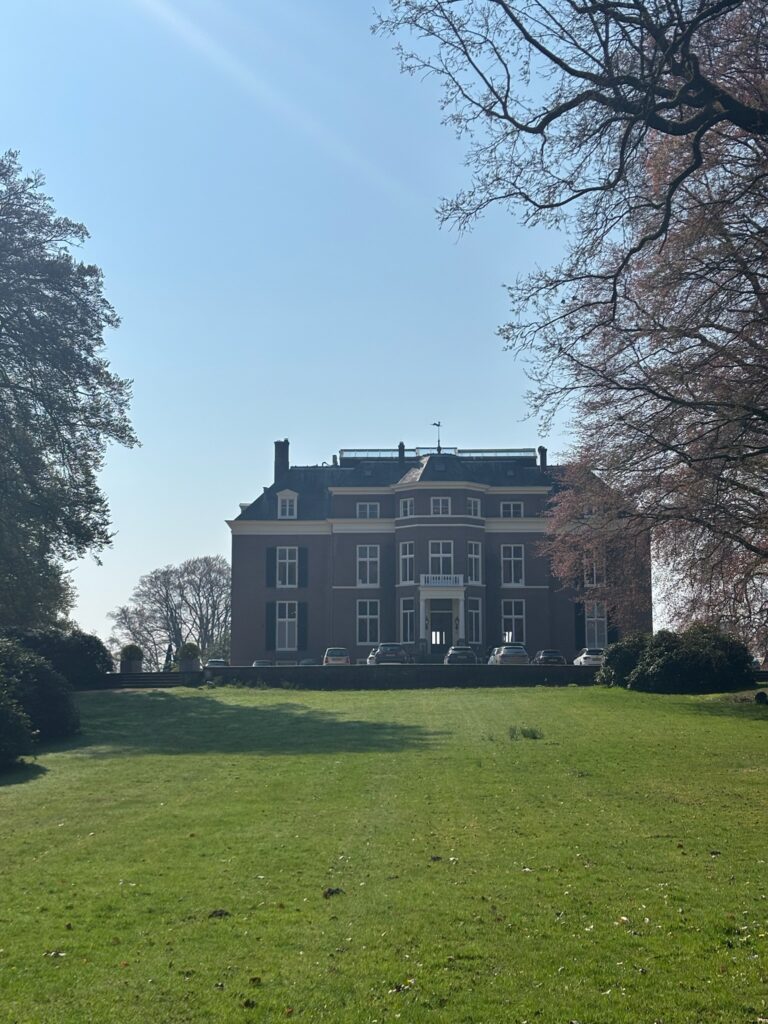
“But, after 40 years, I still understand, very, very little. What is important is that if you start studying about forests and about ecology and about how a forest is functioning, you lose the beauty.
You lose the beauty, because you are thinking in measurements. You learned to think and think in harvesting wood, thinking about production, thinking about earning money with forests.
And, nowadays, because I’m more looking at the forest, the less thinking in management, the beauty is coming back.”
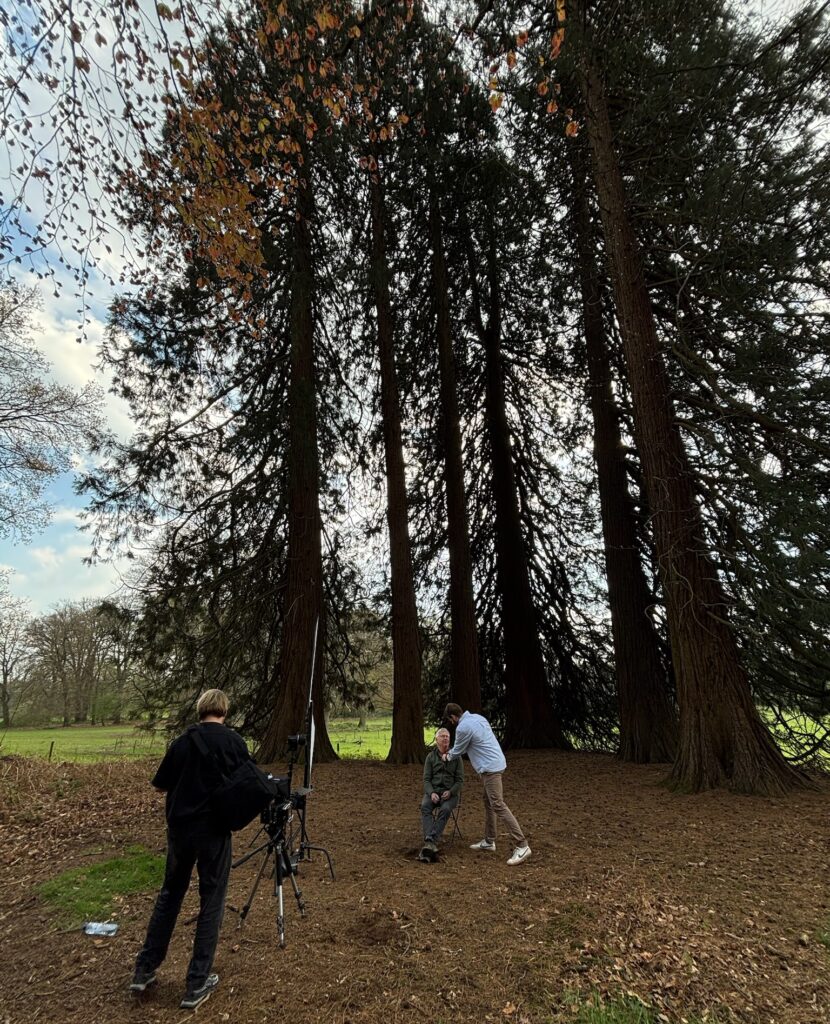
forest management
Thinking in quantifiable terms, like money and measurements, his early days in forest management were lost in the metrics.
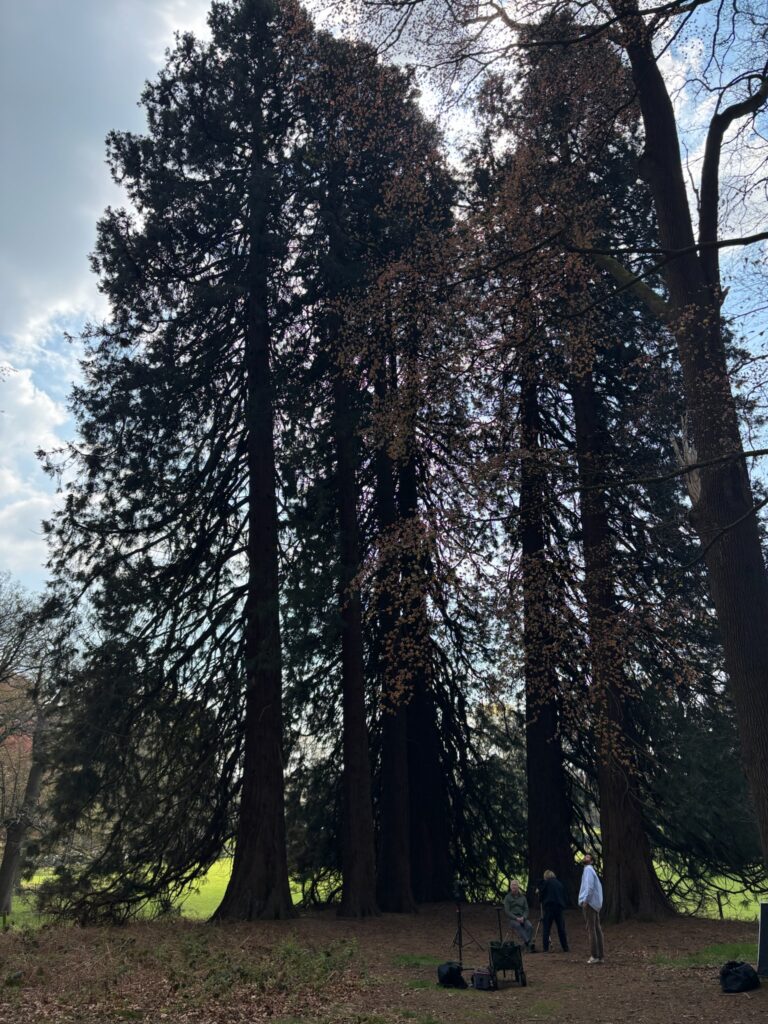
“And it’s very difficult earning money with forests because prices of wood are much too low. It takes a hundred years to grow a tree like this, and it’s worth maybe 4 or 5, €600, so that kind of may make any profit from this.
You must learn how to act in the forest, how to do the management. And then you see more wood and less beauty, less ecology.”
Further, he recalled that biodiversity was rarely emphasized during his study, but now it is a central pillar to good forest management.
Buiting Advies – Ecological Consulting Philosophy
Since starting his company, Ronald is working less with forests and more in cities, helping architects develop biodiverse parks, cityscapes, and communal spaces.
“You could say with my consultancy information first we look at what we see around us. Which species are there? What is the goal from the design? And then we collect all ecological tools. Build them, rebuild them into design tools and then give them to you and me.”
The main principles that guide Ronald and his team are threefold: first, to create habitats that function for a range of species; second, to create climate proof spaces; and third to create spaces where people are healthy and happy. To achieve these goals, he developed a framework decades ago that he still abides with today.
“When I was studying, the management of forests was for years. So there was a plan for 25 years. And of course, the problem is, especially now, with the changing climate, that we don’t know how the situation will be in 25 years.
I found out that we should take a completely different approach. We should only make a plan for the next step. And the plan for the next step is not made by looking to the future. It is made by looking to the past. So no planning, only the next step.”
climate x health x biodiversity
Planning the next step, and keeping his three pillars in mind, Ronald helps his clients meet their ecological requirements with specialized ecological tools. First, he focuses on health.
“First to figure out what can be included in a sustainable design that will benefit the health for health. There has been a lot of research. And one of the things they find out is that people are more happy when they look at trees from the window.”
Then, the focus shifts to climate. Luckily, as Ronald says, some things you get for free. By planting trees to support mental health, you also support the climate.
“The second thing that is important is the same rule. And the 3-30-300 rule, 30% of a city or part of the city or a city block should be in the canopy. It can bring you a cooling down on a hot day.”
Finally, they focus on biodiversity, which is also supported by the inclusion of trees and native planting.
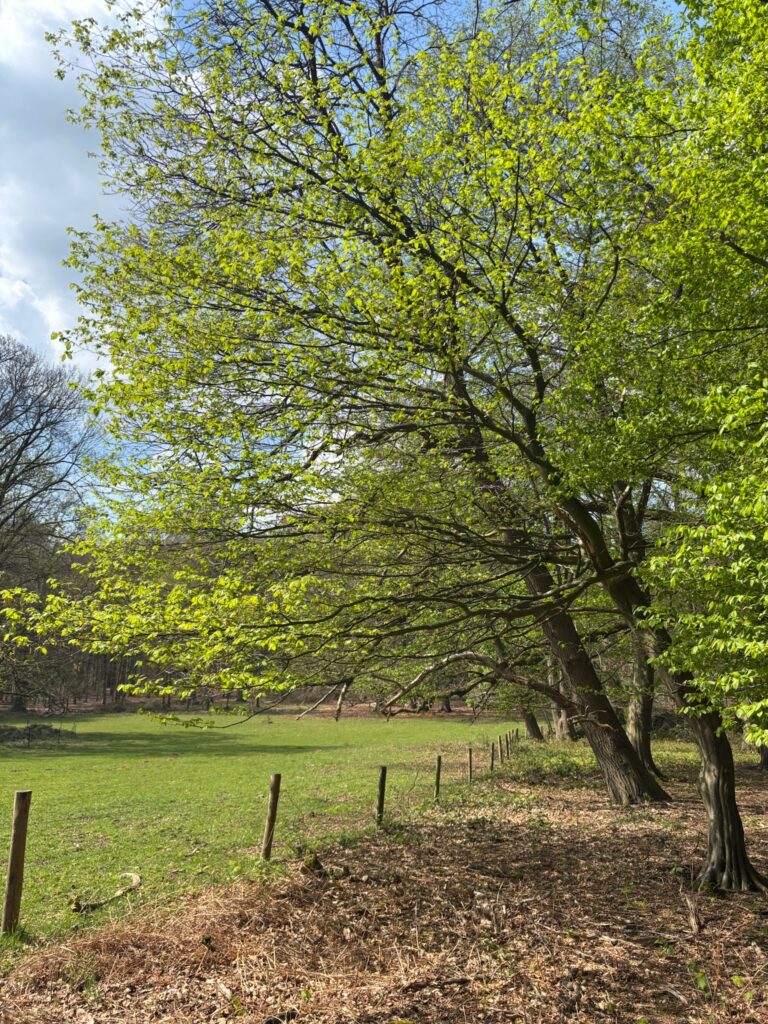
“It starts with insects. So in a good design there is a lot of space. There’s a lot of thinking about how we can get the insects, bees, butterflies, all kinds of other insects into the design, into the city, into the park.
So my idea is if you combine biodiversity with climate and the goals we have on health, a lot of things we get for free.”
beauty in nothingness
Ronald recalled that 70% of the trees planted in the Netherlands last year were the wrong ones, which are not native and gave no shade while using excessive amounts of water. Regarding this, and looking towards the future of the planet and of landscape design, he says:
“In my opinion it’s too late to make mistakes. Every design must be 100% okay. Don’t make any mistakes anymore. We made so many mistakes. Stop making mistakes.”
Ronald spoke extensively about the inclusion of exotic species in many planting designs, a common practice in Landscape Design. He prefers a predominantly native approach to planting, despite the “boring” silhouette it can produce in winter.
“The winter season is a season where there is nothing. Look, now we’re now in spring. Everything comes up. We have new leaves. There are flowers everywhere. Having nothing is a quality. I don’t like winter-green (evergreen) gardens designed to be in the green gardens. But it’s so unnatural. And you lose something below because you lose your winter feeling.”
And seeing that does something. Because it’s winter. It’s part of a good design because that’s part of how nature behaves. Yes, it is beautiful because there is nothing.
Final Pieces of Advice
I asked Ronald what mistakes he found most commonly in today’s landscape architecture practice. The first example Ronald brought up is the issue of not involving an ecologist earlier in the process. With recent policy changes in the Netherlands, ecologists are now required to be involved early in the development process. Still:
“The biggest mistake is that they ask the ecologists at the end. There are some green spots left and maybe we could do something there. But another mistake is that a lot of landscape architects are garden architects. Creating the outer space is not creating gardens. It’s creating a natural environment in which people and species live together.”
When brought on to a project, Ronald’s team follows a multitude of mindful steps. The most important factor to consider from the beginning, according to him, is the soil.
“We start first asking what the soil is. And if it’s natural soil, then it’s easy, because then we are going to find out what is the potential natural vegetation.
We use a Dutch database. And we find out which species can get to this place by air, by water, by foot. And we make a list from the species we want to build new habitats. We discuss that list with the landscape architects, then we write down a toolbox.
You need this, this and this for the species to survive, eat, and give to the land and the soil. And then we try to make as many habitats as possible in the project.”
Conclusion
His final advice to landscape architects is the following:
“The advice I would give to a landscape architect is to try to design habitats and a green environment that is the mirror from the soil or the soil conditions. It depends on the soil. When it’s in natural soil or unnatural soil.
It can tell you exactly what can develop here. How big the groups are that will grow. How many trees will stand together? What percentage of this forest would be bushes? Where would be the open spaces?
That’s what the soil tells me. And the more we can bring in, the higher the biodiversity. So you just read what the Earth has already started telling you just need to have the tools to read it, and then it will give you all the information to know.”
And with that, his reminder that “some things you get for free” became entirely clear. Soil is a free ecological advisor, provided by nature. As biodiversity supports sustainable growth, they are nature’s best maintenance party. In the sense that trees bring us mental well-being and shade, they are nature’s holistic support.
Nature is free, we just have to listen to it and know how to receive the many benefits it offers.