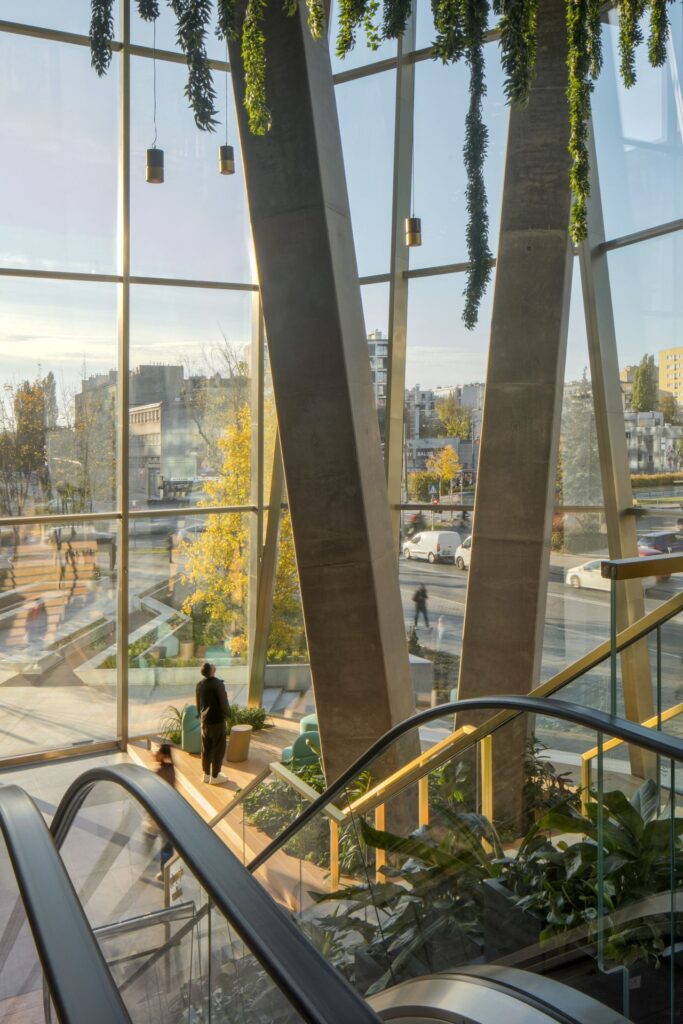
interview with a green designer
An interview with one of the best Dutch ecologists today
by Lauryn Burnes
Our latest project
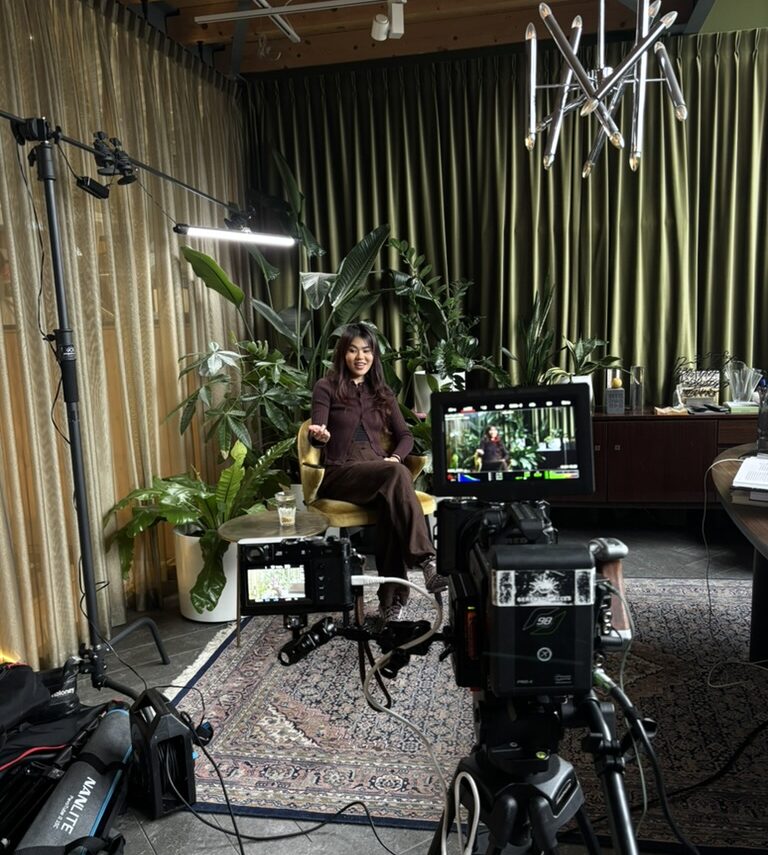
An exciting new project MOSS has taken on this year is our knowledge series, which began with two interviews – one with MOSS’s own green designer, Mawee Pornpunyalert, and one with the Dutch ecologist, Ronald Buiting.
In conversation with experts, we hope to explore the layers and intricacies of green design. Our goal is to shed light on all aspects of sustainable building, and to share this with our community through the visual medium of film.
This blog post will dive into our conversation with Mawee Pornpunyalert, who began working at MOSS four years ago in 2022. After getting her bachelor’s in Architecture, Mawee received a master’s in Architecture. She started at MOSS as an intern, became a junior designer, and was promoted to Medior Green Designer just over a year ago. Our interview dove into her experience, advice, and expertise, which has been acquired through many years in the industry.
educational background in architecture
Mawee recounted that during her Bachelor’s study, “the [architecture] degree was classified as social science, rather than technological, so I really viewed architecture through the lens of how can we create, not just spaces, but places for people?”
In her Master’s program she “tapped into a technical, logical side of [architecture]. And that’s important in green design because, bringing nature into a man-made environment, requires a lot of technical specialty and knowledge.” But even with a comprehensive education in both technical and conceptual architecture, Mawee recognized a lack of recognition for green design.
However, as human health and well-being is brought to the forefront of modern architecture, along with climate adaptive designs, green design is increasingly relevant to all architectural approaches.
“When people think of architecture, they don’t think of greenery. They don’t think of green design at all.”
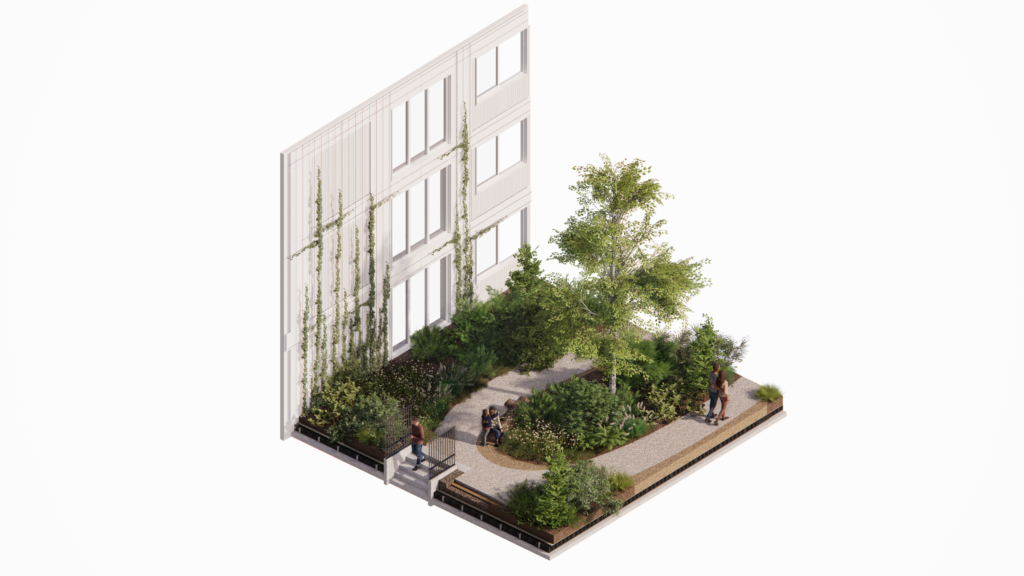
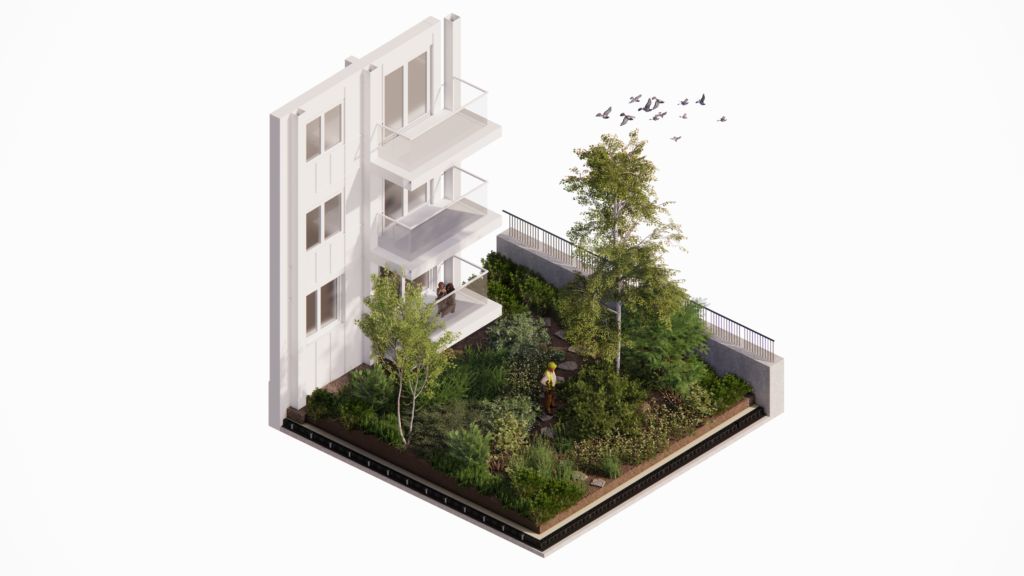
“Green design looks at how humans interact with nature, and how nature interacts with the environment.”
need for green architecture
Cities have become somewhat unpleasant environments to live in. For humans, busy lifestyles can cause stress and mental health issues. For the climate, cities cause issues like the urban heat island effect and decreased biodiversity. Mawee explained that:
“bringing nature in means reducing hot paving, and using green to absorb excess heat. So we can actually help reduce global temperature rise as well as local temperature rise.”
And on a more tangible, human level, “due to our innate connection to nature and biological needs to be around nature, we are experiencing problems and craving [the nature] we’re missing.”
In a MOSS study on how indoor greenery affects mood and productivity, we found that plants reduce stress of the participants. We also found that green in an office increases attendance among employees.
“Greenery can help, not only by making people healthier, but also by encouraging them to want to be in the environment rather than being at home working where perhaps, the environment isn’t ideal.”
Adding plants changes how it looks and how people feel in a space, but Mawee reminded us that it’s not just about numbers, but rather these intangible aspects that are very connected.
She believes good green design deals with development in a more harmonious way rather than looking only at numbers. She prefers to approach the project with a holistic lens:
“The impact of a building goes beyond the plan. We also have to ask: how is it impacting the ecosystem around it?”
How to be a good green designer
As a green designer, Mawee describes her main job as facilitating an environment where nature can thrive, and she does that by setting a framework for it. Creating the right soil depth, selecting plants that can thrive in that environment and other such considerations. And, she explained that, over the years, the design transforms as it becomes a living ecosystem of its own.
“You see the design as a living organism. Whenever we visit a project, it’s always different. And that’s quite exciting.”
She explained that the most important factors for healthy green are the same on both small and large scales: light, water, and soil. On larger scales, a green architect must also continue weight limits, soil irrigation, and grow light placement.
“We want our design to connect to the wider network. It’s not a standalone garden, but one that connects to the existing green and blue network of the city.”
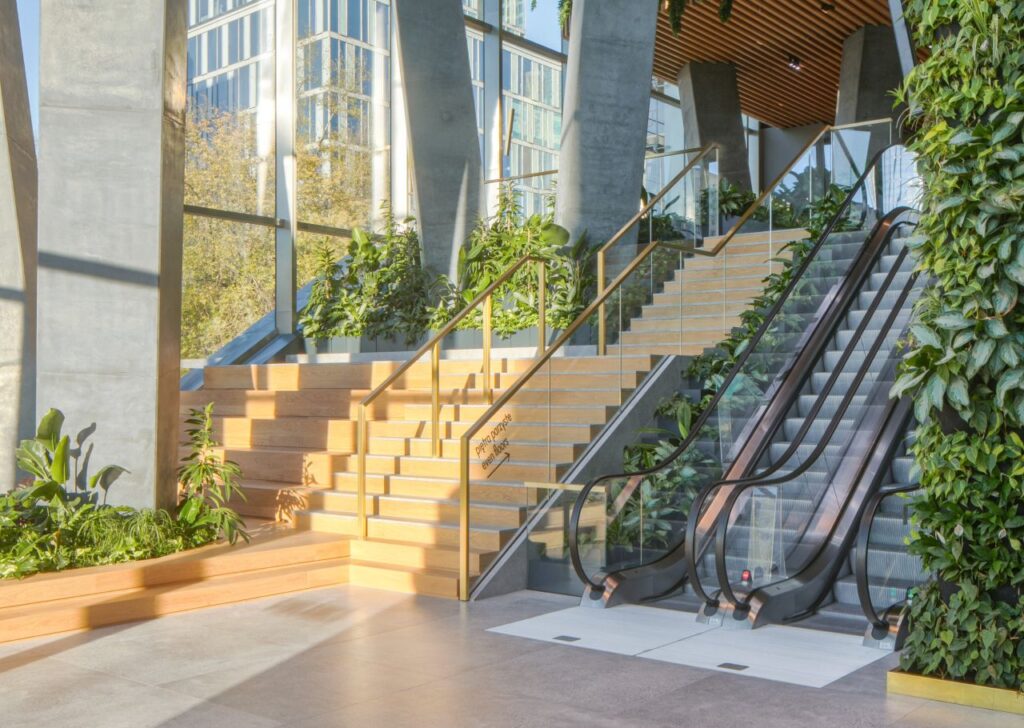
Cities are built with efficiency in mind, and green hasn’t always been viewed as the most efficient use of space. Therefore, a smart design integrates green in a way that enhances, rather than takes away from, the space.
“You should approach the design, from the perspective of how can we reconnect humans to nature rather than viewing nature as an aesthetic thing, to be integrated into a built environment?”
Green architects must also consider how the maintenance team will be able to reach the plants. “It’s about making sure that the personnel can do their job, and take care of the garden.” To make this, and all other considerations, relatively easy, Mawee recommends considering the green aspect from the start.
“A lot of the time projects integrate green at the end, it’s never really as successful as integrating greenery from the very start, because then you are creating an environment where nature can really live and thrive.”
a piece of advice
Mawee left us with her advice for an amateur green designer:
“Think of a space where you feel most connected to nature and try to imitate that. It’s not about visually adding greenery, but it’s about designing for the five senses. So it’s about actually recognizing that being in nature, it activates more than just visual.”
Create an environment where the eyes are activated by using different colors and different textures, but also, touch is activated the feel of the plants and the material. The smell, of course, can also be a useful element. Anything can be meticulously designed and change the environment completely.”
Green design is not simply about adding plants—it is about creating the conditions for nature and people to thrive together. As Mawee’s experience shows, successful green architecture combines technical knowledge, thoughtful planning, and a holistic understanding of living systems. By integrating greenery from the beginning, designers can create resilient spaces that support human well-being, biodiversity, and the wider urban environment.