
human connection to nature
reviewing the study finding that human connection to nature has declined 60% in 200 years
by Lauryn Burnes
Disconnection between humans and nature
At Makers of Sustainable Spaces, our mission is to design indoor and outdoor spaces that invite nature back into our cities, with the intention to reconnect people and nature.
A recent article in The Guardian reported on a new study which showed that human connection to nature has declined by more than 60% over the past 200 years. The research, led by Miles Richardson and his colleagues, reveals how over two centuries, societies urbanised and daily life moved indoors. As a result of this, our relationship with the natural world eroded. The study describes this phenomenon as an “extinction of experience” not of species, but of everyday human encounters with nature.
For MOSS’s Green Team, this is not just a statistic. It is the motivation and context in which we work every day.
The Disappearance of Nature from Daily Life
Richardson’s study used a surprising indicator for how human connection to nature has evolved: language. The team analysed the frequency of nature-related words in books over two centuries and found a dramatic decline. Words like “meadow,” “blossom,” and “river” have faded from common cultural use, suggesting a physical and emotional distancing from the natural world.
This linguistic shift reflects a deeper societal change. Today, most people live in cities, work indoors, and spend large portions of their day in front of screens. Children have fewer opportunities for unstructured play outdoors. Biodiversity in urban environments has decreased. Nature has become something we “visit,” rather than something we live in.
The study surveyed residents of Sheffield in the UK, finding that these urban dwellers spend less than five minutes per day in natural spaces on average. Five minutes is less time than many people typically spend waiting for a coffee.
This is the “extinction of experience,” and it matters because connection to nature is not just aesthetic– it is foundational to human well-being.
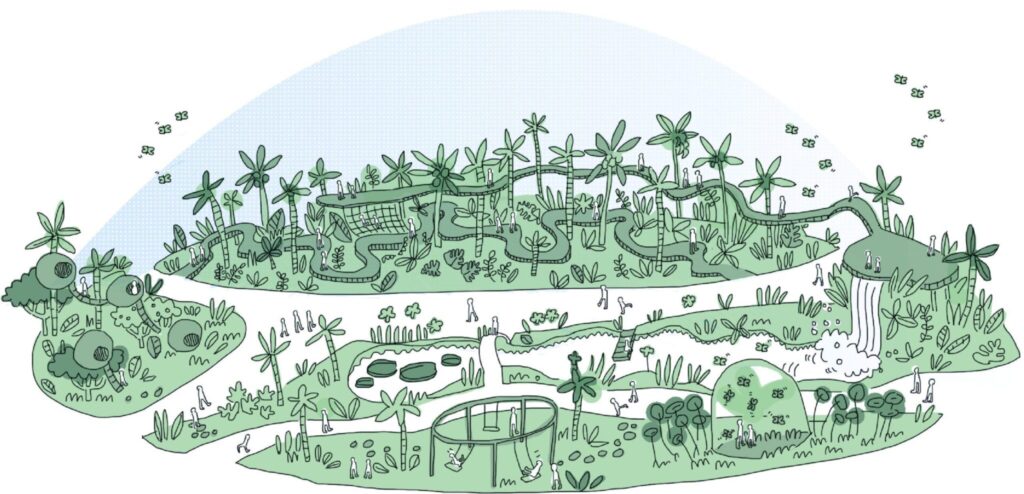
“Time spent among trees is never wasted time” – Katrina Mayer
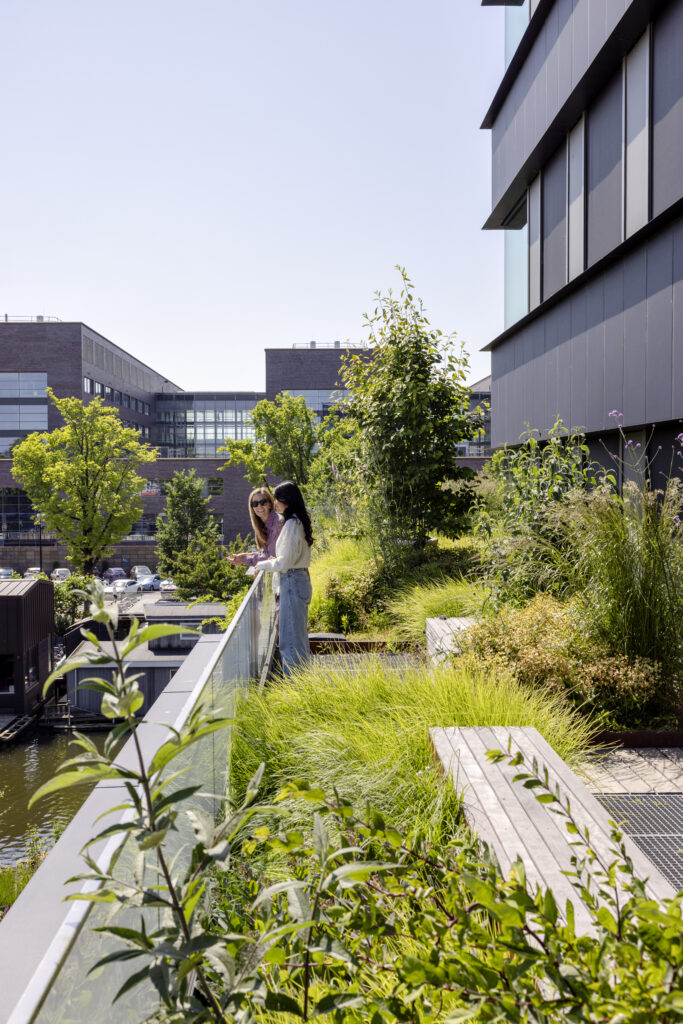
Why Nature Connection Matters
Decades of research show that contact with nature supports mental health, reduces stress, improves concentration, and strengthens interpersonal connection and community. People who feel connected to nature are also more likely to engage in pro-environmental behaviour. Essentially, when we care about nature, we are more inclined to protect it.
The study suggests that declining connection creates a feedback loop. Parents who grow up with limited experiences of nature are less likely to pass those experiences on to their children. Over time, each generation may accept a more degraded, less biodiverse environment as “normal.” This has commonly been cited as the Shifting Baseline Syndrome, and it’s something MOSS is addressing head-on.
The architectural design of our cities, buildings, and public spaces shapes how often and how meaningfully people encounter the living world. Therefore, the Shifting Baseline Syndrome is not just an environmental issue, it is a cultural and spatial one.
This is where design becomes a powerful tool for change.
Design Bridging People and Nature
At MOSS, we don’t see green design as aesthetic decoration. We view it as infrastructure for enhanced human experience. Plants are part of the spatial framework that shapes how a place feels, sounds, and functions. When integrated intentionally, green elements can soften acoustics, regulate microclimates, improve air quality, and create visual and sensory richness that invites people to slow down and engage.
Beyond these functional benefits, urban green offers something ever more profound: exposure to living ecosystems. When exposed on a regular basis, this can help rebuild people’s familiarity and emotional resonance with nature. Seeing seasonal change, noticing new growth, observing insects, textures, shadows, and light interacting with plants. These small moments are nature’s quiet resistance to the “extinction of experience.” These moments are the restoration of experience
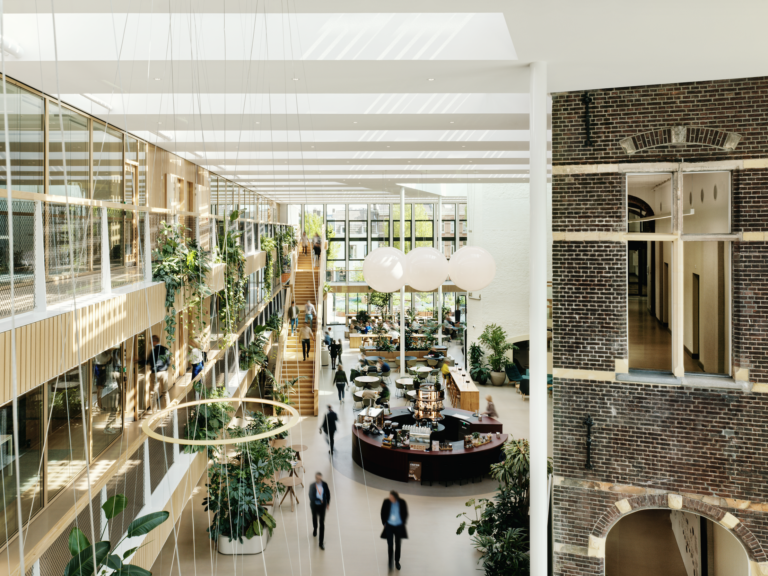
From Occasional Nature to Everyday Nature
The study emphasized that awareness alone can not reverse the decline in human-nature connection. Structural changes are needed, especially in cities with dense populations. Greener urban environments, nature-rich education, and daily engagement with nature are highlighted as key strategies by Richardson’s study.
MOSS’s work focuses on integrating biodiverse greenery into workplaces, campuses, care environments, and public buildings. These are places where people already spend their time, so instead of requiring a special trip to a park or forest, nature becomes the backdrop to everyday life.
A biophilic atrium, a green office, or a care environment with integrated greenery are not just aesthetic spaces; they are spatial conditions that support healthier, more connected lives. When nature is woven into the fabric of daily life, connection begins to rebuild.
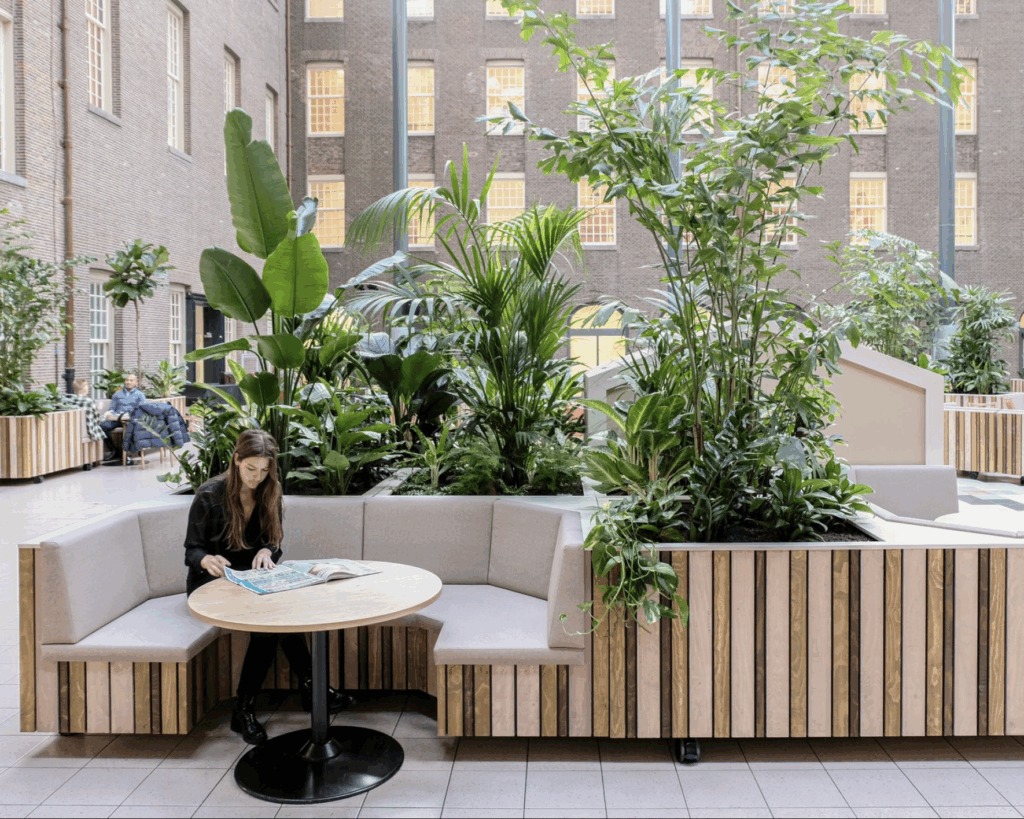

A Cultural Shift in the Making
The study offers a tentative yet hopeful message: nature-related language in books has begun to increase again in recent years, perhaps reflecting rising environmental awareness. This suggests that cultural attitudes can change.
We believe enhancing spatial experience with urban green can accelerate this shift. When people regularly inhabit environments that feel alive, biodiverse, and connected to natural cycles, their sense of what is “normal” begins to expand again. The presence of nature becomes something people seek, value, and advocate for.
This is the deeper purpose behind our projects. Each green wall, exterior courtyard, or indoor landscape is part of a larger effort to reshape the relationship between people and the environments they inhabit.
Designing for Reconnection
A 60% decline in human connection to nature is a powerful warning, but it is not yet set in stone. The study makes clear that connection is shaped by experience, and experience is shaped by environment. In other words, the spaces we design today influence how people will relate to the natural world tomorrow.
At MOSS, we see every project as an opportunity to resist the “extinction of experience.” By placing biodiverse, living systems at the heart of architecture and urban life, we help create environments where nature is integral.
Design, applied in this sense, becomes a tool for shaping environments where green is present. Over time, this redefines what people expect from the places and cities they inhabit. Green living systems become essential infrastructure for well-being, resilience, and social connection.
The findings highlighted by this study show us that when cities, buildings, and institutions commit to making nature visible and accessible again, they help lay the groundwork for a renewed relationship with nature. As we see it at MOSS, inviting nature back into our cities is not only about ecology. It is about restoring a relationship that supports human health, emotional resilience, and a deeper sense of place. Through design, we can help ensure that nature is something people can experience every day.
Source reference:
- https://granobeckasin.com/en/human-connection-to-nature-is-at-risk-study-shows/
- https://wildhunt.org/2025/08/losing-the-wild-study-finds-human-nature-bond-has-plunged-over-the-last-200-years.html
- https://outdoorlearningdirectory.com/human-connection-to-nature-has-declined-60-in-200-years-study-finds/