From Plants to Places
Training in Planting Design
by Eirini Trachana
Introduction
Planting design is a niche profession. It sits somewhere between design, ecology, and horticulture. A planting designer needs to understand spatial design principles while also knowing plants inside out: how they grow, how they behave over time, how they interact with one another, and how they respond to different environmental conditions.
It is a profession that requires both creativity and technical knowledge. At the same time, the field is constantly evolving. New research, changing environmental challenges, and shifting design trends continuously influence the way we think about planting. As planting specialists, we need to stay informed and curious, while also developing our own opinions about what makes planting sustainable, beautiful, and ecologically valuable.
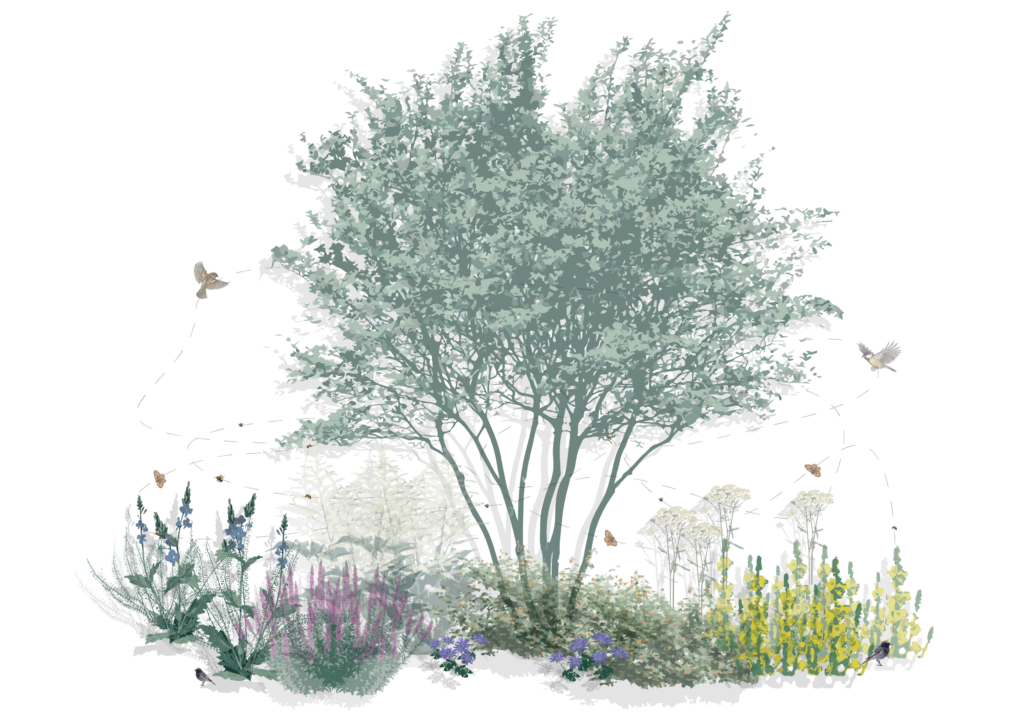
So how do you train someone in such a broad and ever-changing field? At MOSS, we approach this training through three complementary methods: visiting projects and landscapes in real life, discussing and understanding our planting design principles, and carrying out research and analysis at the desk. Together, these three elements help designers develop not only knowledge, but also the confidence to make informed planting decisions.
Site Visits: Learning from Real Landscapes
Nothing replaces seeing plants in real life.
Books, photographs, and planting plans can teach us a lot, but they can never fully communicate the experience of being surrounded by vegetation. The scale, texture, movement, seasonal changes, and atmosphere of a planting scheme only become truly visible when you visit it yourself.
Planting design is a discipline where science and design constantly overlap. Questions arise that cannot always be answered from a drawing. How large does a plant actually become? How quickly does it establish itself? Does it spread aggressively or stay neatly in place? Does it create a lush appearance, or does it look sparse for part of the year?
And perhaps most importantly: how do plants perform together?
A planting combination that looks perfect on paper may feel completely different in reality. Some combinations create strong visual statements, while others appear weak or disconnected. Learning to recognise these differences is an essential part of becoming a planting specialist.
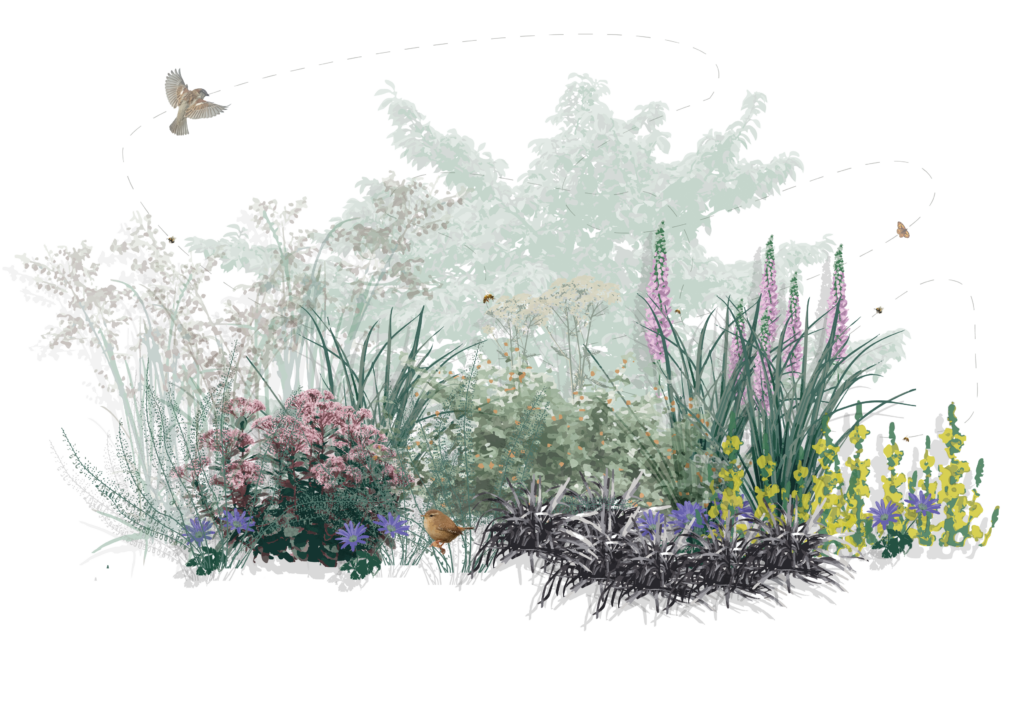
For this reason, our team organises several site visits throughout the year. By visiting projects in different seasons, we observe how planting evolves over time. These visits combine plant recognition, on-site analysis, and discussions about the design structure and performance of the planting.
They also encourage critical thinking. Which plants are thriving? Which ones struggle? If we visit in April, are some species still dormant while others are already providing colour and structure? What impact does that have on the overall experience of the space?
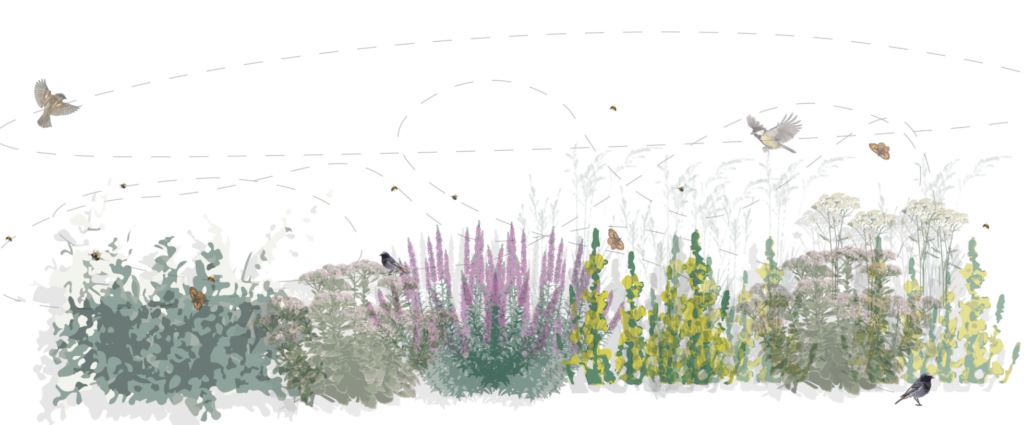
Beyond the visual aspects, site visits help us understand the ecological performance of a design. Are pollinators using the planting? Are birds finding food and shelter? Does the vegetation create a rich and inviting habitat?
Experiencing a planting scheme firsthand allows us to touch, observe, and evaluate it in a way that no photograph ever could. It trains our eye and strengthens our understanding of how planting works in the real world.
Building a Shared Design Philosophy
Alongside practical experience, we believe it is important to discuss the principles that guide our work. At MOSS, we have developed a shared set of planting values over many years of practice. These principles are not strict rules, but rather a framework that helps us make thoughtful design decisions. They provide a common language for discussing planting design and evaluating whether a proposal meets our ambitions.
Every project starts with understanding its limitations and opportunities. Factors such as soil depth, sun exposure, wind conditions, water availability, and maintenance requirements all influence the final planting strategy. Rather than applying a fixed recipe, we tailor each design to the specific conditions of the site.
Ecology plays a central role in this process. Wherever possible, we prioritise species that are well suited to the local environment. Native plants often provide valuable food and shelter for insects, birds, and other wildlife. They form part of existing ecological networks and can strengthen local biodiversity.
This does not mean that non-native species are automatically excluded. In some cases, carefully selected non-native plants can make a positive contribution by extending flowering periods, increasing resilience, or attracting pollinators. The key is making conscious choices based on ecological value rather than purely aesthetic considerations.
Another important principle is creating year-round interest. Gardens should not only be attractive during their peak flowering season. We aim to create planting schemes that offer changing experiences throughout the year, both for people and for wildlife. Early spring flowers, summer abundance, autumn colour, winter silhouettes, seed heads, and evergreen structure all play a role in creating dynamic landscapes.
We also value richness and diversity. By combining different textures, heights, forms, and flowering periods, we create planting schemes that feel layered, immersive, and resilient.
Finally, we consider the relationship between people and nature. Research continues to demonstrate the positive effects of green environments on human well-being. Green spaces can reduce stress, encourage movement, and create opportunities for social interaction. For this reason, we design landscapes that invite people to engage with nature rather than simply observe it from a distance. Discussing these principles helps new designers understand not only what decisions we make, but also why we make them.
Desk Analysis and Research
Field observations and design principles provide a strong foundation, but every project requires additional research.
No two sites are identical. Each location has its own ecological context, history, climate, and design ambitions. To understand these factors, we conduct extensive desk research throughout the design process.
This research draws from many different sources, including books, scientific publications, ecological reports, plant databases, and local studies. The goal is to understand the unique characteristics of a place and translate them into meaningful planting strategies.
For example, when working on projects in Limburg, we investigate the specific flora and fauna associated with the region. The biodiversity around Maastricht is strongly influenced by the historic walls found in the city. These structures support specialised wall vegetation and create unique ecological conditions.
On projects located near these historic environments, we have incorporated additional wall elements into the design. These features not only reference the local landscape character but also provide habitat opportunities for species that depend on similar conditions. In this way, ecological value becomes an integral part of the design rather than an afterthought.
Research also involves close collaboration with ecologists. Their expertise helps us better understand the relationships between plants, insects, birds, and other wildlife. By combining ecological knowledge with design thinking, we can create targeted interventions that support specific species.
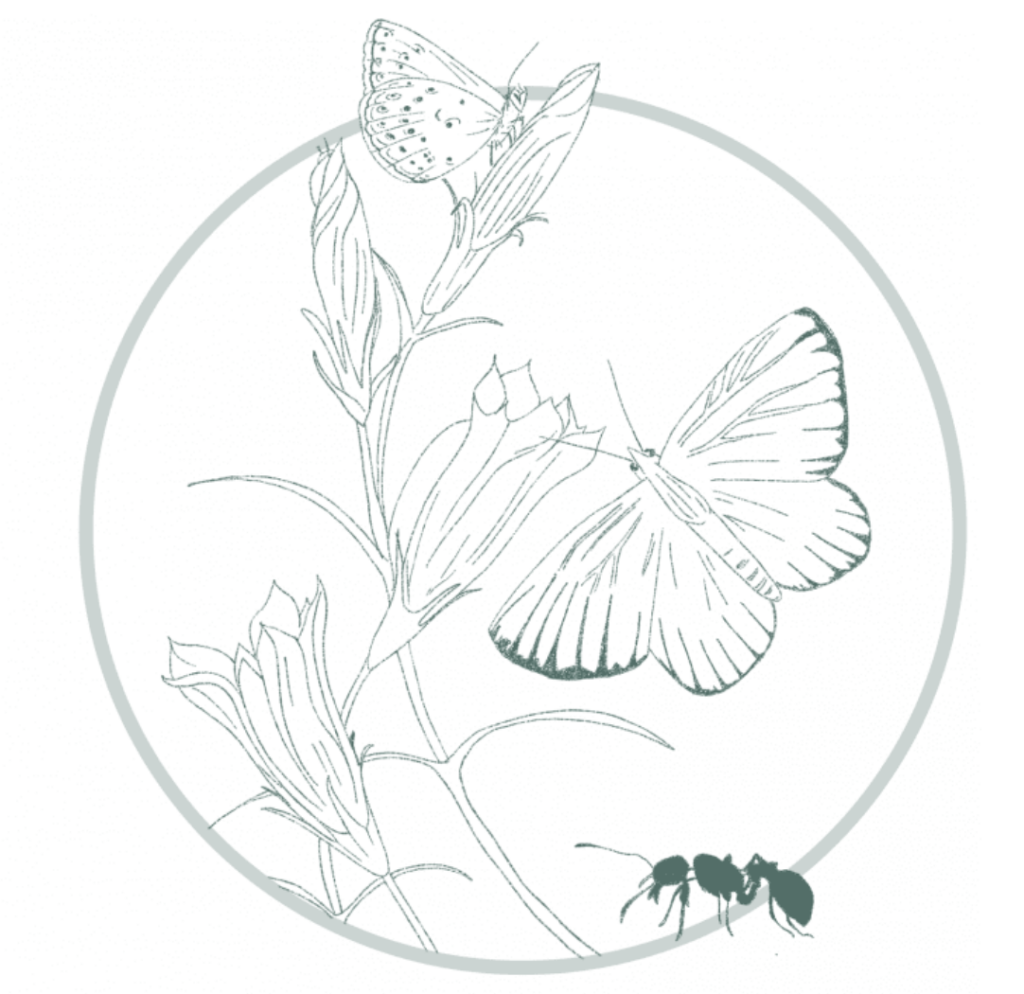
A good example comes from the Utrecht region. Two native bee species, the small bellflower bee and the large bellflower bee, depend almost entirely on bellflowers from the Campanula genus for pollen. Without these plants, the bees struggle to survive.
When designing projects in areas where these species occur, we actively include Campanula species in the planting palette. We also look beyond the plants themselves by introducing features such as dead wood, which provides nesting opportunities for solitary bees. Small interventions like these can make a meaningful contribution to local biodiversity while enriching the overall planting design.
Bringing It All Together
Training in planting design is not about memorising plant names or following a fixed set of rules. It is about learning to observe, question, analyse, and make informed decisions.
The combination of site visits, shared design principles, and research creates a learning process that is both practical and reflective. It helps designers understand plants not as individual species, but as part of larger ecological and spatial systems.
Ultimately, planting design is about connecting people, plants, and place. The more we learn from landscapes, from research, and from each other, the better equipped we are to create green spaces that are beautiful, resilient, and meaningful for both nature and society.