
biomimicry vs Biophilia
Are we designing with Nature or Designing for Our Connection to It?
by Lauryn Burnes
Biomimicry and biophilia are buzzwords in the field of design and architecture today, as the industry seeks to build more sustainable futures in cities worldwide. Often, we hear these terms used interchangeably, grouped under the category of “nature-inspired design.”
However, despite their common origin, they represent two very different approaches to how we engage with nature in design and architecture. Understanding the distinction between these terms is essential to understanding how MOSS designs, because a biophilic design does not always mean biomimicry, and vice versa.
For us, the distinction is particularly relevant because with each design, we ask how can we bring nature into this space? (biophilic lens), as well as what role does nature play in shaping this space? (biomimicry lens)
This blogpost will explain the difference between these two concepts, and explore the importance of both perspectives.
biomimicry: learning from nature
Biomimicry looks to nature as inspiration and a model. Nature has been solving design challenges for 3.8 billion years. It naturally developed strategies for:
- energy efficiency
- material optimization
- resilience
- closed-loop systems
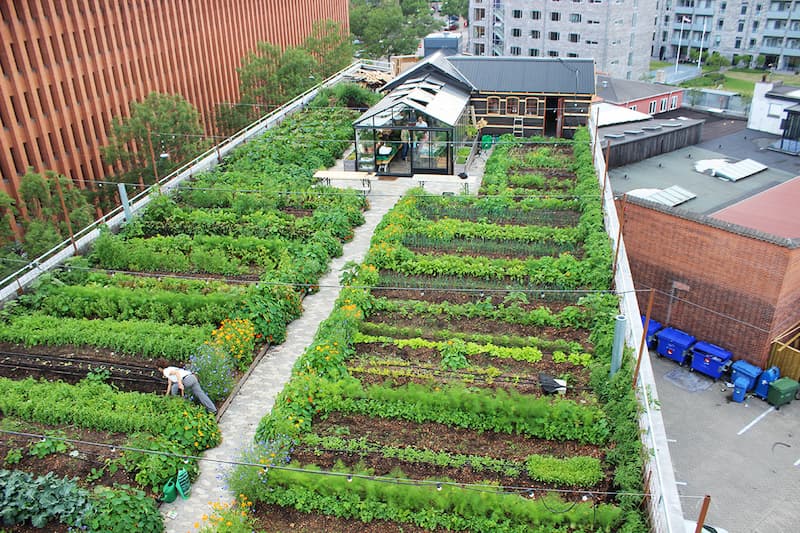
Not only has nature developed effective and efficient solutions to common problems, but as MOSS blog post, biometric patterns, explores, nature’s solutions can be beautiful and aesthetically pleasing. Biomimicry in design is about tapping into these solutions, both for effectiveness and inspiration. Rather than replicating the appearance of nature, biomimicry seeks to learn from:
- Natural forms (how something looks)
- Natural processes (how it works)
- Natural systems (how they connect and evolve)
A practical example is how the antimicrobial characteristics of shark skin inspired synthetic antimicrobial cleaning methods, which reduce the need for chemical cleaning. Or how structural light refraction on butterfly wings have informed the invention of dye-free material coloring methods.
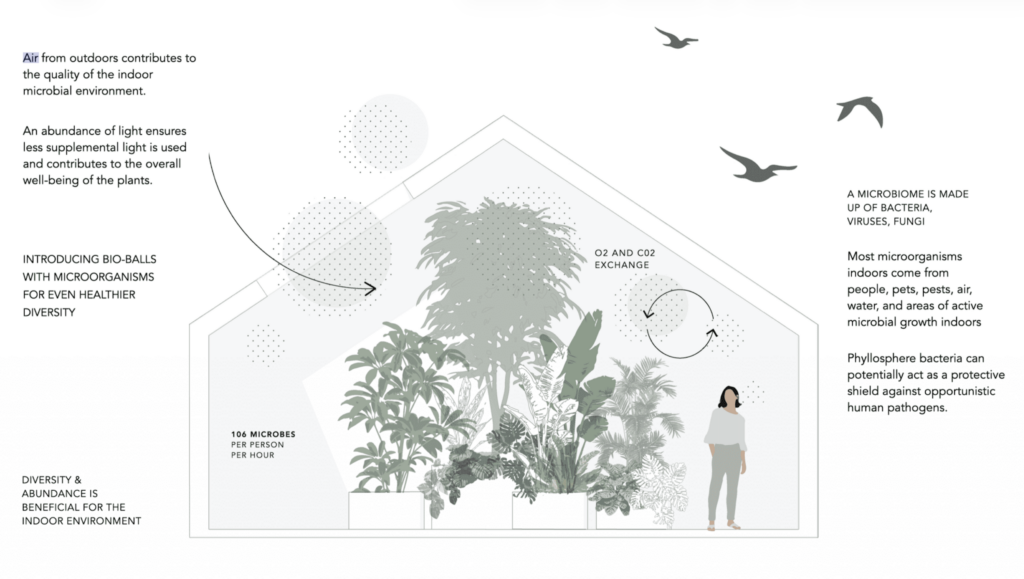
Ultimately, biomimicry is using inspiration from nature to problem-solve or create. In design, it functions as a support for designers who are looking for natural, sustainable solutions. Additionally, it supports creative and organically aesthetic choices in the design process.
In this way, biomimicry aligns most with regenerative design. It is about creating systems that behave like ecosystems—efficient, adaptive, and inherently sustainable.
Biophilia: Designing for Human connection
If biomimicry is about learning from nature, biophilia is about connecting with it. The term was popularized by biologist Edward O. Wilson, and he describes an “innate emotional affiliation of human beings to other living organisms.” Literally, it translates to a love for natural organisms and forms.
In design, this translates into biophilic design: an approach that integrates natural elements into the built environment to support human well-being. At MOSS, we often do this by designing green-integrated spaces, prioritizing natural shapes and organisms.
But despite what people often assume, biophilia is not just about plants.
Research shows that it encompasses a wide range of spatial and sensory conditions, including:
- visual and non-visual connections to nature
- natural light and airflow variability
- materiality and texture
- spatial qualities like prospect, refuge, and mystery
Green design can bring all these elements to a space, as plants improve air quality, and exterior projects especially attract biodiversity which creates a dynamic appearance and brings natural audio to a space. Additionally, water elements on interior projects can bring the kinetic, audible elements that biophilia encourages.
According to a study discussed in past MOSS blog Human Connection to Nature, human connection to nature has declined 60% in the past 200 years. Biophilic design responds to this growing problem of disconnect, particularly in urban environments, where the majority of the world’s population now lives.
Without improved connection to nature, studies predict negative impacts on health, well-being, and social cohesion. Biophilia, then, is both psychological and physiological. It is about creating spaces that reduce stress and promote creativity as well as productivity.
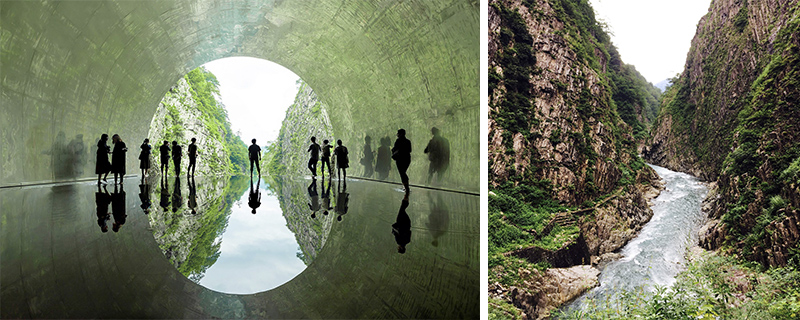
differences and similarities
At first glance, biomimicry and biophilia seem closely aligned. Both:
- draw inspiration from nature
- contribute to sustainable urban green
- challenge conventional design thinking
But their intentions diverge in a some key ways:
Biomimicry | Biophilia |
Nature as inspiration | Nature as experience |
Focus on performance and systems | Focus on well-being and perception |
Solves design problems | Enhances human experience |
Often invisible in the final design | Often visible and sensory |
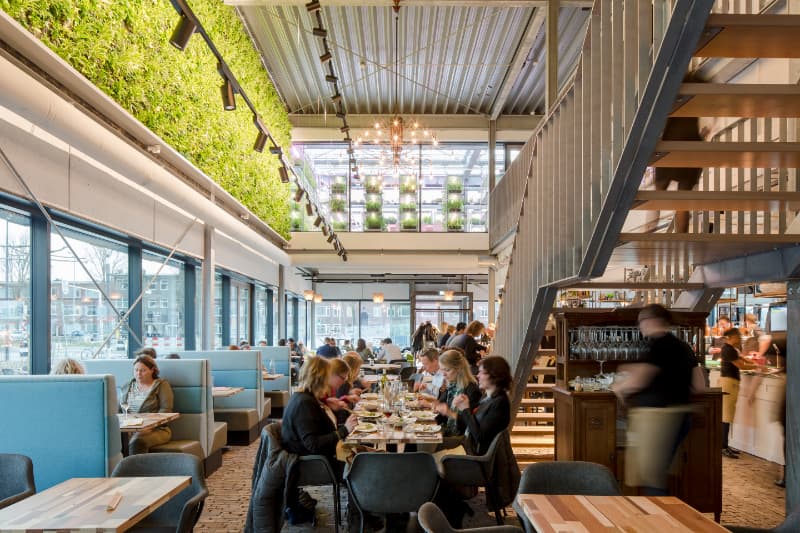
Biomimicry determines how a building is structured, while biophilia determines how a building appears. Biomimicry directs the technical, operating at the level of function. Biophilia informs the conceptual, operating at the level of experience.
designing living systems
For designers, there is exciting potential in combining these two approaches. The most successful environments go beyond efficiency, offering a human-centered approach to working and living space.
In the research on biophilic cities, this integration is very clear. Urban environments that embed natural systems (ex. green infrastructure, biodiversity, water cycles) also encourage stronger community engagement and increased well-being.
This shifts the focus from designing straightforward places, to really designing dynamic relationships between. people and nature, as well as buildings and ecosystems. These are the intersection points where biophilia and biomimicry overlap.
What This Means for Design Today
At MOSS, this plays out across projects in different ways. Biophilic design gives us inspiration to:
- create calming, immersive environments
- improve well-being in workplaces and public spaces
- reconnect people with natural rhythms
But integrating the concept of biomimicry, we ask how can these spaces also behave like nature? It pushes us to think beyond planting schemes and visual greenery, and instead toward:
- circular systems
- adaptive environments
- regenerative processes
It challenges us to design spaces that are not just inspired by nature, but that utilize natural systems.
Toward a Regenerative Future
The distinction between biomimicry and biophilia reflects two ways of seeing nature. First as as a teacher, then as an inspiration.
Biomimicry asks us to learn from nature’s systems, while biophilia asks us to reconnect with its beauty.
In a time of climate urgency and urban density, it is no longer enough to create spaces that are sustainable in isolation. We need to rebuild human connection to nature, and there is no better way to do so than to learn from nature’s sustainable solutions. We want to create environments that are:
- ecologically integrated
- emotionally restorative
- systemically resilient
Spaces that both function and feel like ecosystems. At MOSS, this is where our work continues to evolve: bringing nature into design in a way that allows both people and nature to thrive together.