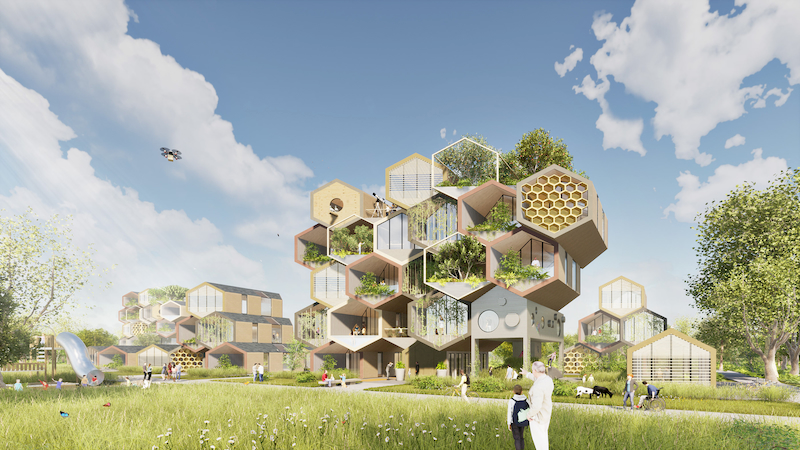
biometric patterns in design
Bees. Nature. One story by ALVEOLE x MOSS
by Ela Cestar
Advances in digital technology and most recently 3D printing mean that architecture can now boast shapes and structures inspired by the natural world that would have once been impossible…
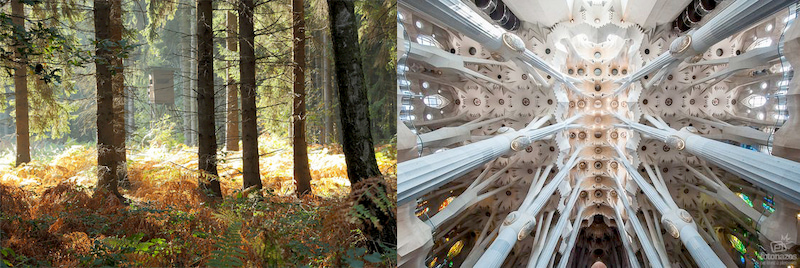
In the late 19th Century, Antoni Gaudi was deeply influenced by the atmosphere of forests for the interior of his masterpiece, the Sagrada Familia cathedral in Barcelona, Spain. A century or so later, cutting edge “biomimetic” architecture is even incorporating living matter into its structures. The London’s largest ‘living wall” at the Palace Hotel for example, is host to lush vegetation and the species utilising this on its eye-popping facade. And in Germany, the extraordinary “algae house” harnesses microalgae as a renewable energy source by growing it in transparent surfaces. (1)
“Nature is by far the richest source of inspiration and knowledge that we have.”
– Dr. Marcos Cruz
Over the decades, the field of biomimetics has shifted from where it started off, looking towards nature for architectural volume. Sea creatures, crab shells and spider webs are among the species and natural artefacts architects have looked to for such inspiration.The industry is now moving towards a more environmentally and nature inspired understanding – of how nature responds to its environment, and how humans can do the same.
What is Biomimicry?
Biomimicry (literally: imitation of the living ) draws inspiration from solutions of natural selection and implements the principles into human engineering. The biomimicry approach aims to favour “choices” tested by nature, which has had millions of years to understand what works best and what doesn’t. Designs following biometrics will ultimately allow human productions to be more efficient, resilient and sustainable.
NATURE HAS ALREADY FIXED MANY PROBLEMS OF SOCIETY
Animals, plants, and microorganisms are experienced engineers. They know what works, what’s appropriate, and most importantly, what lasts on Earth. The main belief of the biomimicry approach is that after 3,8 billion years of research and development, what did not work is now a fossil and what is around us is the secret to survival.
Janine Benyus, author of the book “Biomimicry: innovation inspired by nature” solidified the science of biomimicry explaining in her book how mimicking designs and strategies found in nature could change the way humans think in every field of life including architecture.
She explains the process of biomimetics as relying on the fact that living organisms and engineers have a similar goal: to create a structure in the cheapest way possible- either in terms of energy or money. Biomimicry can be applied to buildings in order to make materials stronger, self-assembling, self healing and use natural processes and forces for basic building functions. (2)
According to Janine Benyus, biomimicry sees nature as:
- A model. It studies nature’s models and imitates them or uses them as inspiration for designs or processes with the goal of solving human problems
- A measure. It uses ecological standards to judge the rightness of human innovations
- A mentor. It is a new way of observing, assessing and valuing nature
“The way biological systems solve problems is pretty different from the way engineered systems solve problems,” says Peter Niewiarowski, biologist at the University of Akron and its Biomimicry Research and Innovation Center. Human-designed solutions, he says, are crude and additive. They rely on using more materials or energy to accelerate reactions—both costly expenditures. Natural processes rely on unique geometry and material properties. (3)
When you ask how to be better adapted to this planet there are no better models than the species that have preceded us for billions of years. To simplify the understanding of Biomimicry and its application scope, it has been broken down into 3 levels:
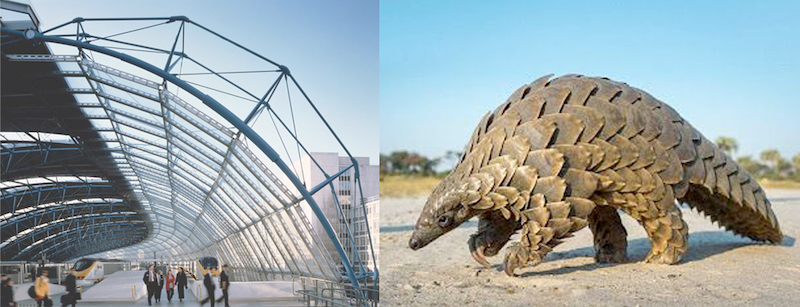
1) Organism level – Mimicking a form or a shape from nature
For instance, design for the St.Pancras International Terminal takes inspiration from the flexible structure of scaled exterior of animals like the pangolin. The design accommodates variable pressures and shifting forces which occur as trains arrive and depart from the station, so the organisation of a ‘scaled’ exterior facade allows for these fluctuations.
2) Behavioral level – Mimicking a process carried out by nature
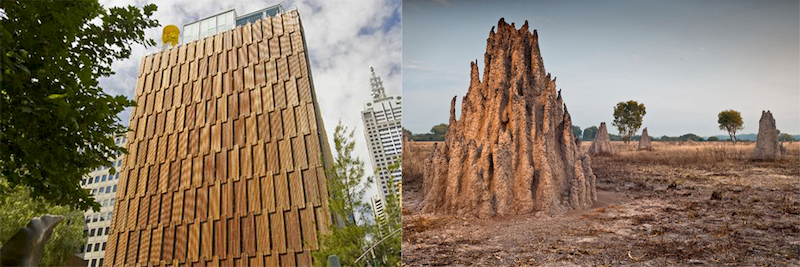
An architectural example of biomimicry at the behavioural level is demonstrated by the CH2 Building in Melbourne, Australia. The basis of this building is inspired by techniques of passive ventilation and temperature regulation observed in termite mounds which help create a thermally stable interior environment. Water which is mined (and cleaned) from the sewers beneath the CH2 Building is used in a similar manner to how certain termite species use the proximity of aquifer water as an evaporative cooling mechanism.
3) Ecosystem level – Mimicking a material and how it performs or the mimicking of natural ecosystems.
This level of biomimicry can be used in conjunction with other levels of biomimicry (organism and behaviour). It is also possible to incorporate sustainable building methods that are not specifically biomimetic such as interfaced or bio-assisted systems, where human and non-human systems are merged to the mutual benefit of both.
An example is the Lloyd Crossing Project proposed for Portland, Oregon by a design team including Mithun Architects and GreenWorks Landscape Architecture Consultants.
Nature is “lazy and intelligent,” says Sigrid Adriaenssens, an engineering professor at Princeton who researches biomimicry. Nature is exceptional at turning waste into food—a fundamental tool for balancing ecosystems that architecture has ignored for the vast majority of its history.
But for designers, biology offers lessons in circular economy and hyper efficient resource management. Nature also works in a kind of “critical regionalism,” the practice that architecture should reflect the geography and culture of its setting. Take for example, there are parasites so specifically evolved, they can only survive with their particular host. (3)
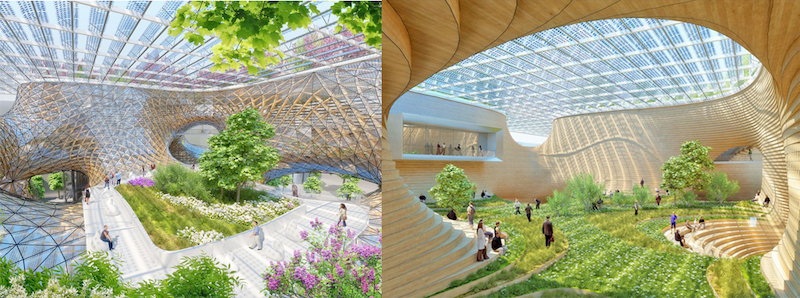
“Nature is lazy and intelligent”
-Sigrid Adriaenssens
BIOLOGICAL SOLUTIONS ARE THE RESULT OF MILLIONS OF FAILED PROTOTYPES
At Princeton, Adriaenssens came to biomimicry not by looking for ways nature could solve engineering problems, but through discovering that the most efficient solutions resembled natural objects. Nature, she says, “uses very little material and places it in the right place.”
As an engineer, Adriaenssens is working on building screen systems that use elasticity, geometry, and thermobimetal to open and close in response to sunlight—like a flower. Biomimicry tends to be referenced more by architects than engineers, but there’s reason to believe that the latter field has more in common with the practice. Though often beautiful, biology doesn’t worry about aesthetic choices the way architects do.(4)
LIKE ENGINEERS, NATURE RELENTLESSLY PURSUES RAW UTILITY, WITH GRACEFUL SYMMETRY AS A BYPRODUCT
EXAMPLES OF BIOMIMICRY
- Climbing pads capable of supporting human weight mimic the biomechanics of gecko feet.
- The aerodynamics of the famous Japanese Bullet train was inspired by the shape of a bird’s beak.
- The first successful airplane by the Wright brothers in 1903, was inspired by flying pigeons.
- Architecture is inspired by termite mounds to design passive cooling structures.
- Velcro is born from the observation of the hooks implemented by some plants for the propagation of their seeds via animal’s coat.
- The study of shark skin inspired effective swimming suits, as well as a varnish for planes fuselage.
Biomimicry thinking helps create products and processes that:
- Are sustainable: Biomimicry follows Life’s Principles. Life’s Principles instruct us to build from the bottom up, self-assemble, optimize rather than maximize, use free energy, cross-pollinate, embrace diversity, adapt and evolve, and use life-friendly materials and processes, engage in symbiotic relationships, and enhance the biosphere.
- Perform well: In nature, if a design strategy is not effective, its carrier dies. Nature has been vetting strategies for 3.8 billion years. Biomimicry helps you study the successful strategies of the survivors.
- Save energy: Energy in the natural world is even more expensive than in the human world. Plants have to trap and convert it from sunlight and predators have to hunt and catch it. As a result of the scarcity of energy, life tends to organize extremely energy efficient designs and systems, optimizing energy use at every turn. Greater efficiency translates to energy cost savings and greater profitability.
- Biomimetic technology would help us also overcome environmental issues, such as the greenhouse effect, global warming, or even the ozone hole. By reducing the vast amount of CO2 emissions from the built material, and purifying the surrounding environments. One has to predict that this impressive new technology will be necessary to use in this 21st century and we have to understand it well in order to be used in the right direction and contribute to mankind. (5)
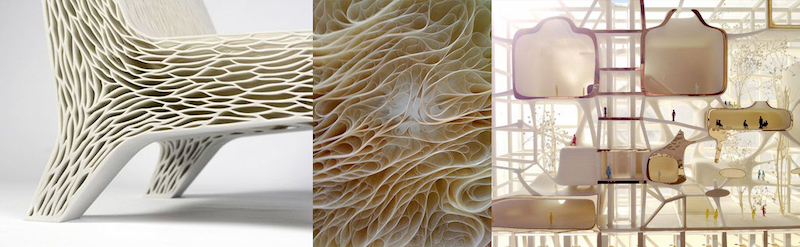
There are many parallels to be drawn between nature and architecture, some of which have been studied for centuries and others which are now becoming relevant as we seek to remedy the strained relationship between the built and the natural environment. Whilst conventional approaches to sustainability focus on reducing energy and resource consumption, biomimicry provides a forum whereby engagement with natural systems helps produce a more positive and regenerative design.
Biomimicry, rather than being employed as a scientific method to emulate nature in a built form, this technique should also be applied in a more holistic sense where designers acknowledge the complex interactions which take place within the natural world and, more importantly, understand our position in it. Not only is nature a readily available source of inspiration given that it is present in every molecule around us, but natural forms have also evolved within the same confines as humanity, utilising only the material and energy resources available on Planet Earth. As the human species continues to evolve, we must embrace our potential for future development whilst also respecting the collective wisdom of our predecessors. By doing so, the prospect of generating a sustainable future for our successors will become both an achievable and a rewarding aspiration.