
AI Transforming Design
AI in landscape design, sustainable landscape architecture, green design innovation, AI tools in architecture
by Bala Perumal
More and more, we are noticing the presence of AI across all industries, and the field of design and architecture is no exception. Specifically in landscape architecture and sustainable design, we are now using AI tools for analysis, visualization, and performance simulations.
Naturally, this brings up an important question: If AI can generate layouts, render concepts, and simulate environmental conditions… What remains for the designer?
From our perspective, the answer to this question lies in the function of how AI is used in our design process. As long as this tool is used intentionally and intelligently, it transforms how we design– not why we design.
In this blogpost, we explore how AI can support the design process; asking questions like how can AI be used to improve our work? And why does human creativity remain central to what MOSS does as sustainable landscape architects?
AI Automates Repetitive Tasks and Increases Efficiency
When AI was first introduced, many of us quickly noticed a very obvious function of this software: it reduces the time spent on repetitive and technical work. This makes it an incredible tool for achieving efficiency and productivity in more clear-cut areas. As designers, this grants us more time to focus on strategy and creativity.
Traditionally, landscape architects must spend many hours on tasks such as:
- Site data analysis
- Sun path studies
- Wind and drainage modeling
- Iterative drafting and revisions
- Rendering production
“According to the American Society of Landscape Architects, professionals are increasingly using AI for data processing and visualization, not for replacing creative direction. ”

For example, in a sustainable urban courtyard project, AI tools can quickly test:
- Different planting densities
- Hardscape permeability
- Water retention strategies
Instead of spending days calculating variations, designers can review intelligent options within hours. This effectively reforms the role of the landscape architect, who is no longer spending most of their time making measurements and calculations, but instead using readily-available information to make strategic, creative choices.
As is true in all fields, by assisting with the technical side of things, AI gives us more time to access the creative parts of our mind, where previously inaccessible ideas can now be brought to production.
AI Enhances Environmental Performance in Sustainable Design
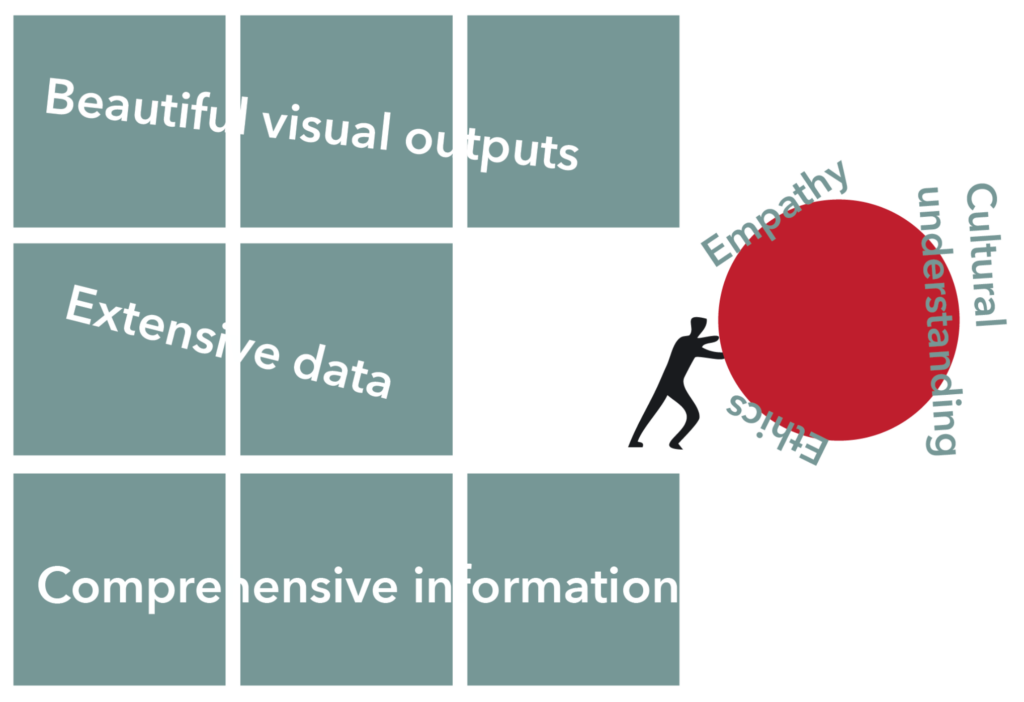
Another feature of AI that transforms how we design is the vast, comprehensive database that this tool grants us access to. With access to the bottomless well of knowledge that is the internet, our data-driven sustainability decisions are much stronger.
Today, sustainable landscape architecture is no longer based only on aesthetics and ‘looking nice’. It must address measurable environmental initiatives:
- Urban heat island reduction
- Stormwater management
- Carbon sequestration
- Biodiversity enhancement
Research in architectural engineering journals shows that AI can improve environmental simulation accuracy, meaning we have more access to better data that will help us reach the environmental goals that landscape architecture aspires to. Further, AI data can improve predictive capabilities, ultimately making designs more sustainable.
For example, AI tools can evaluate:
- Which plant species perform best under future climate scenarios
- How soil composition affects water absorption
- Long-term maintenance needs
- Lifecycle environmental impact
In the instance of an indoor greenery project that MOSS is working on, AI tools can help in:
- Analyze natural light availability
- Recommend plant placement for optimal growth
- Predict maintenance cycles
- Reduce water and energy consumption
At MOSS, this type of integration strengthens the environmental intelligence behind every green installation. While we still draw mainly on our teams knowledge and known database to determine the values and factors that guide our decisions, AI readily offers the information necessary to make the most informed decisions.
However it is important to note, human designers define what sustainability means in context.
Creativity, Context, and Ethics Remain Human
Based on the growing capacity for this tool to support how we work as designers and architects, it has become clear that while AI generates options, humans are still autonomous in the task of defining meaning.
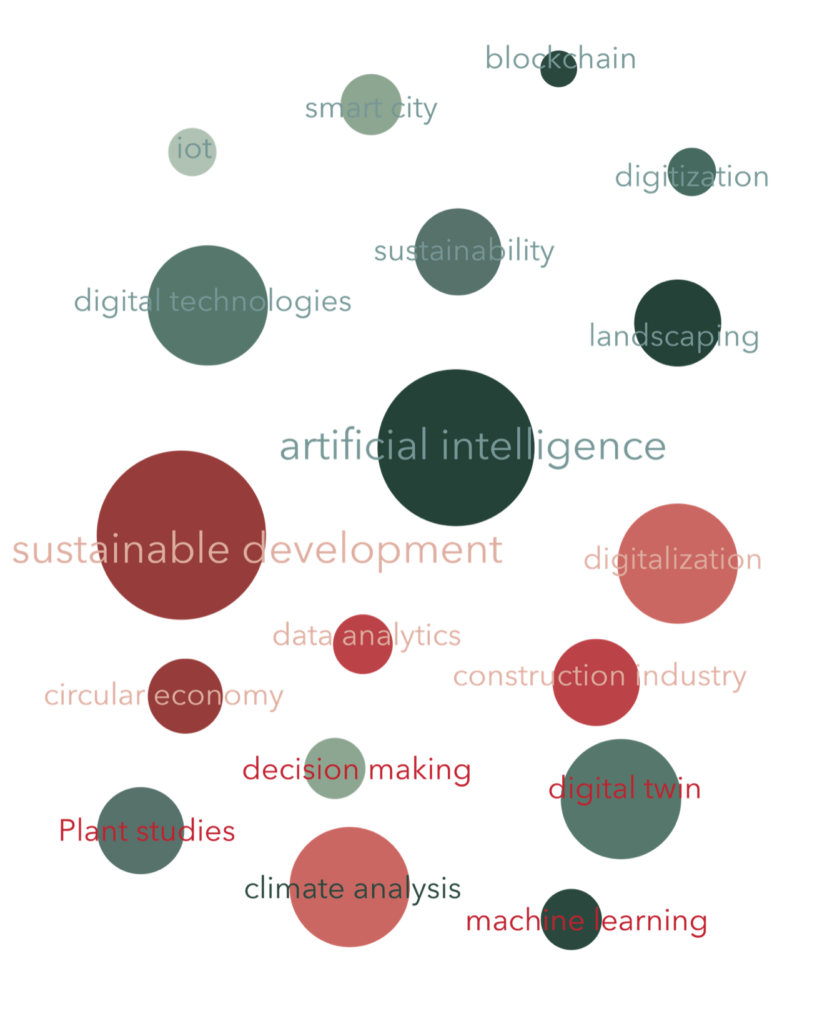
AI can produce extensive data, comprehensive information, and beautiful visual outputs, but it does not understand:
- Cultural identity
- Community dynamics
- Emotional experience of space
- Social equity
- Local ecological narratives
Landscape architecture is not just spatial organization. At MOSS, we see it as a sort of storytelling through the environment. For time immemorial, humans have lived side-by-side with nature. With a mission to bring nature back into our built environment, it is essential to stay cognizant of these abstract ideas that define our ways of living. AI cannot comprehend these, because they are so distinctly natural and human.
Still, academic discussions on AI and design theory warn that over-reliance on automation can lead to generic, standardized outcomes. Creativity requires interpretation, not just generation.
For example, if using AI in the creation of a planting scheme, the computer might suggest an optimized scheme based on climate efficiency. But a designer must decide:
- Should native species be prioritized for biodiversity?
- Does the space need seasonal variation for user experience?
- Does the design reflect the identity of the neighborhood?
These decisions involve empathy, ethics, and cultural understanding— qualities AI does not possess.
Synthesizing and Integrating
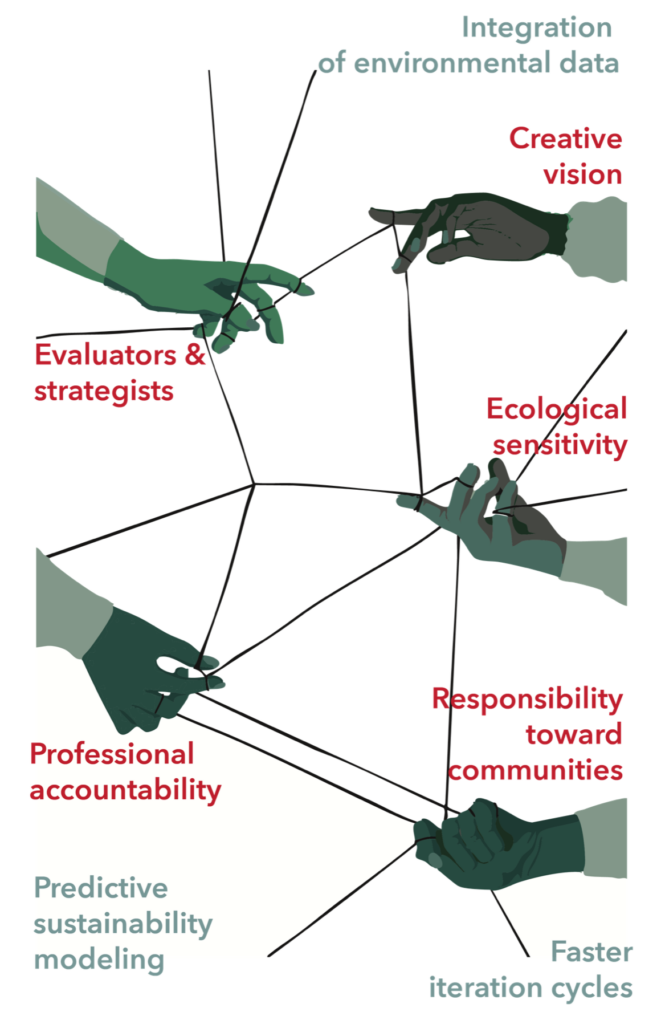
So, what is actually changing in our field with the introduction of Artificial Intelligence? To put it briefly, the main elements are listed below:
- Less time on repetitive drafting
- More integration of environmental data
- Faster iteration cycles
- Stronger predictive sustainability modeling
- Designers acting as evaluators and strategists
And to shift the lens, we also want to focus on what is staying the same:
- Creative vision
- Ecological sensitivity
- Responsibility toward communities
- Professional accountability
To put it simply, AI has shifted and accelerated our workflow, but it hasn’t changed the process through which we arrive at a final design; and it certainly hasn’t affected the way we interact with nature and creativity as human beings.
By boosting productivity, enhancing environmental analysis, and broadening the scope of design exploration, artificial intelligence is revolutionizing the landscape architecture design process. It enables designers to devote more time to thinking, interpreting, and inventing and less time to producing and calculating. Additionally, it creates a fresh avenue for limitless innovation. AI thus becomes a useful tool in the workflow, aiding in the rapid testing of concepts and the processing of complicated data. However, at MOSS, creativity and the highly personal drive our team brings to interacting with nature and creating meaningful, ecologically conscious settings with empathy, ethics, and cultural awareness are not replaced by technology. Much like a compass, AI may help point us in the right direction, but it is ultimately the designer who charts the course toward resilient, sustainable environments.
Sources/References:
-American Society of Landscape Architects (ASLA). How Landscape Architects Are Incorporating Artificial Intelligence.
-Santos, R. et al. (2023). Artificial Intelligence in Architecture and Design. Buildings Journal.
-Autodesk Research. AI-Driven Environmental Analysis in Early-Stage Design.
-Müller, L. (2024). Generative Artificial Intelligence and the Transformation of Design Workflows. arXiv.
-Roudsari, M. (2019). Ladybug Tools: Environmental Analysis for Parametric Design.
-MIT Media Lab. Data-Driven Urban Design and Climate Responsive Landscapes