bees x urban green
Bees. Nature. One story by ALVEOLE x MOSS
by Tessel Pool
Our understanding of the complexity of nature is ever-evolving and we are quickly learning that a single plant does not have as much impact as an array of plants, complemented by a system of insects, bees and other fauna. Only when we grasp this can we start opening up such spaces for people. We need to move away from the outdated idea that green spaces are solely for a single organism; an ecosystem is not an ecosystem if only one component is present.
Alvéole, an urban beekeeping amenity, and Makers of Sustainable Spaces (MOSS), a leader in weaving nature into cities, came together to discuss and synergise their work on the premise that one without the other is incomplete. The discussion centered around how as practitioners and change-makers, we can enhance collaborations to facilitate a functioning ecosystem. This collaboration specifically symbolizes the holistic ideal of future green city environments.
how it started
Alvéole started as an urban experiment carried out by co-founders, Alex, Declan and Etienne. They initially introduced a beehive into their back garden in Montreal as a personal experiment but soon learned it had become an experience, alluring curious neighbors to the hive. The trio noticed that the urban community was curious, eager to learn and had the intention of becoming more conscious, but they often lacked knowledge and were unsure of how to begin. The introduction of the beehive in the neighborhood presents many learning opportunities through a highly immersive experience. Alvéole developed from the curious minds of urbanites and three eager founders keen to continue educating the community.
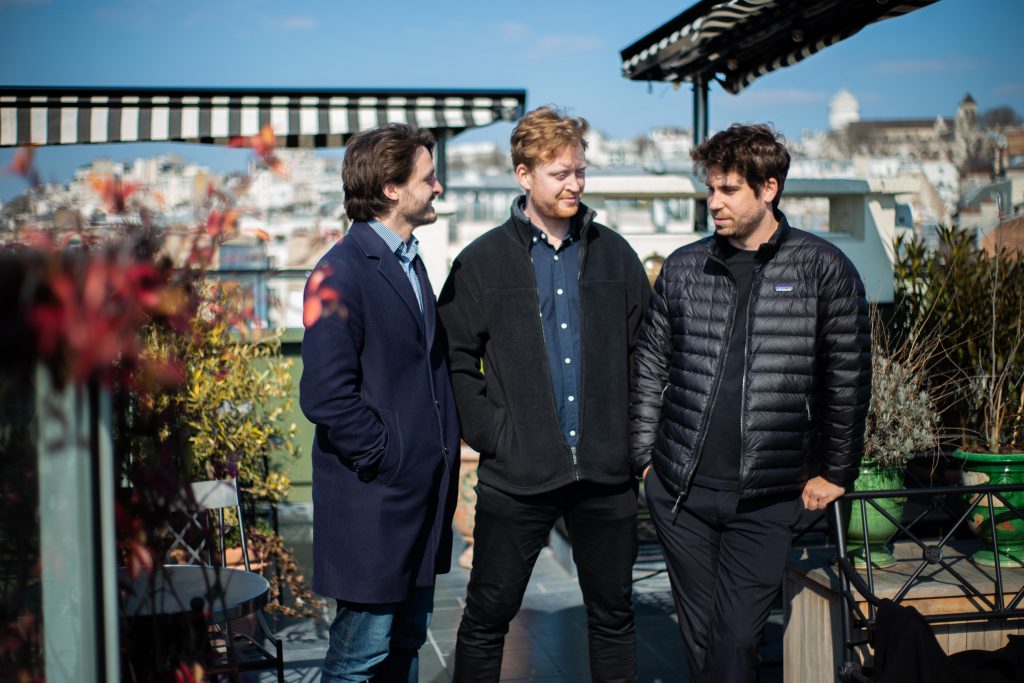
“We realized people were intrigued, curious of what was going on inside the hive. We understood that cities are curious to learn, want to be aware of what’s unusual, what’s out there.”
– Etienne
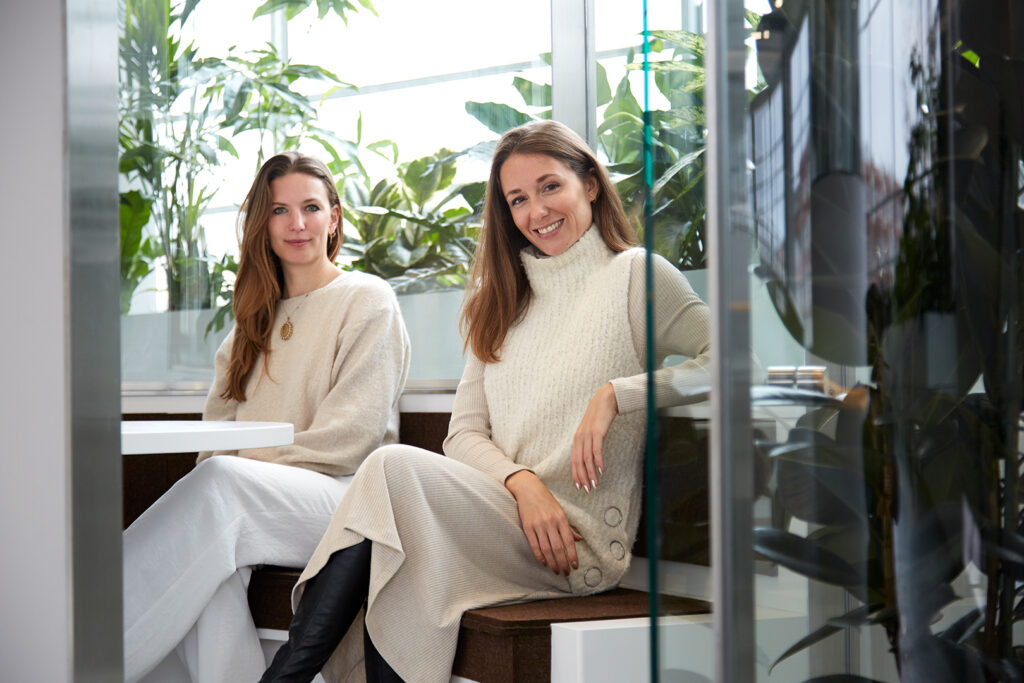
Makers of Sustainable Spaces (MOSS) advanced out of an epiphany when the two co-founders, Nina and Tessa, started recognising the importance of integrating nature in urban spaces. The pair met during their studies at the Technical University of Delft studying architecture and industrial design and launched MOSS soon after in 2013. What started as a short-term project, has in fact developed over 10 years into a leading green design firm. Both Tessa and Nina have a unique perspective, always thinking globally, and how people act and interact. The road to success and sustainability is to carry out research and analyze the space based on the current world and outside news and trends. Tessa and Nina decided they wanted to play a role in shaping the future of cities by creating a vision of what they wanted it to look like and then considering what was required to design it.
“Let’s design the future we want to live in.”
– Tessa
THE ECOSYSTEM: RECONNECTING PEOPLE WITH NATURE
It is the responsibility of green designers, bee specialists, and advocates of change with a vision for sustainable cities, to provide spaces for all living beings to coexist. Without it, there would be no pollination and without pollination, there is no life. The shared goal of Alvéole and MOSS is to reconnect people and plants with nature by creating green urban ecosystems that are sustained through symbiotic and diverse natural systems. This is achieved by creating spaces that attract both people and all other forms of wildlife. This approach has an impact on what we define as four key urban pillars including: people, business, building and our cities.
PEOPLE
In order to create healthy green ecosystems, we need to design healthy spaces for people to coexist with flora and fauna. As primary users of these envisioned spaces, we are responsible for creating healthier, more diversified and immersive environments for everyone to live in and experience on a daily basis. The findings recognise the benefits and are based on data-driven knowledge that analyze the impact of plants on both interior and exterior spaces. Many studies provide evidence for this including the well-known research paper Human Spaces: The Global Impact of Biophilic Design in the Workplace carried out by Robertson Cooper, which looks at how reconnecting people to nature in the built environment improves well-being and productivity and that biophilic design has a strong and measurable impact on the workforce. According to this study, workers exposed to nature in their daily work lives report a 15% higher level of well-being, are 6% more productive, and are 15% more creative. Similarly, MOSS recently carried out a scientific study in collaboration with the University of Wageningen referred to as MOSS LAB 1.0 which studied the large-scale effect of plants on interior spaces, revealing that with the majority of our time spent indoors, plants impact people’s productivity, blood pressure and heart rate amongst various other things like workplace satisfaction. MOSS LAB will carry out a second chapter in collaboration with the University of Wageningen and the green Installation and maintenance expert company called De Koninklijke Ginkel Groep to study the impact of plants on acoustics and sound, which specifically unpacks the influence of plant life on office spaces and user well-being, which in turn has a great effect on people’s experience of a green space.
Integrating nature into the outdoor realm entails a different process in comparison to an interior space. Both Alvéole and MOSS agree that the preferred outcome for an outdoor space is for it to mimic an untamed natural landscape in avoidance of artificiality. The design of an outdoor space should be multi-layered. The space should include blossoming plants and bees in order to replicate pristine nature and enhance environments for living creatures to co-exist alongside people. A key component of enhancing biodiversity in outdoor spaces is by incorporating beehives.
At Alvéole, the focus lies in the connection between people and nature. Through technology and human experiences, they offer multiple touchpoints with nature to activate one’s senses. Their dedicated web-app, My Hive, provides insight into the entire process from the installation phase, inspection, team building activities through to honey harvesting. Unfortunately, there is often a negative association with bees because they are still largely undiscovered. Alvéole places much emphasis on shifting this fear to a more positive emotion through a short educational experience, allowing individuals to become more open to something they would not believe they would otherwise ever see. Etienne described bees to be “like a small society, they are very relatable. That’s why people can feel deep emotion, a deep connection to them. Alvéole’s ultimate objective is to share the intrinsic experience of nature through bees but how does one share an experience without having experienced it previously? The key is to make the experience visual in order to evoke an emotional connection and understanding. This can also be perceived as the awareness phase which entails disclosing less information but showing the process, thus evoking a deeper emotion for people. Both Alvéole and MOSS have noticed that enhancing people’s awareness is very difficult and Alvéole’s strategy is to activate an apt sales team to engage with the general public to explain the unexpected. Etienne illustrates this by adding “to raise awareness for a certain problem, you need to make it visible to people. Make them use their senses.”
Engagement is also highly important in order to educate people about the importance of nature. Engagement can be carried out by connecting people as a result of the MOSS projects, or through an interactive event that activates your senses like at Alvéole. Engagement can look different to achieve the same objectives but both parties acknowledge the drive for connection in the output of their work.
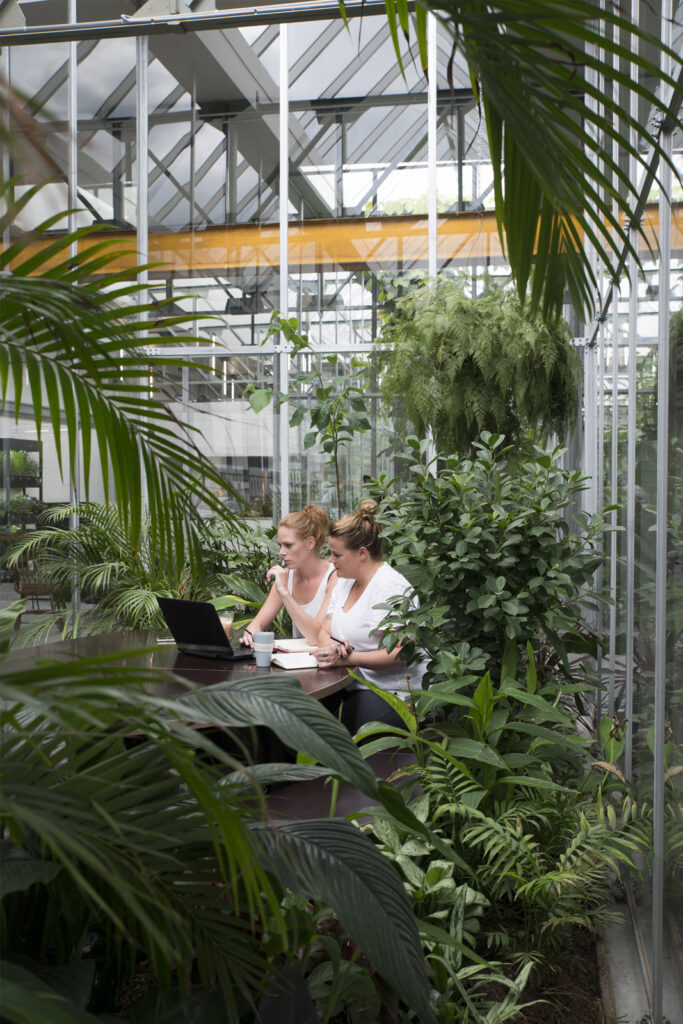
“We need to find collaborations between partners whom we trust, but also with owners of buildings and employers. We need to make it one story. You can’t have one without the others.”
-Tessa
BUSINESS
Both Alvéole and MOSS alike express very high economic benefits for businesses as a result of the positive impact their services have on people, employees and tenants. According to research, implementing nature into both interior and exterior spaces creates an amenity or building service, which equates to a higher Return On Investments (ROI) for business owners and thus also the developers. Additionally, there is an increase in perceived physical and mental well-being for users of the space increasing overall retention and resulting in less sick days. Lastly, creativity is heightened when in nature as a result of the relaxed human brain.
There has been an apparent shift in user behaviour as a result of the Covid-19 pandemic and employees are working from home more regularly, which has become a familiar environment for many. As a result, the perspectives of developers and business owners have also evolved as they have acquired a deeper understanding of the importance of creating healthier work environments; currently there is a deeper need to encourage people to go back to the office. Thus, employers have to gain ground to create new versions of the workspace we once knew. In a post-pandemic urban environment, companies now understand the effect of immersive spaces by integrating green in the space and it has become much more than merely introducing a single plant but rather looking at ways to enhance contact with nature and creating entire ecosystems. The economic benefits of enhancing nature increases the Return On Investment through productivity, creativity and well-being
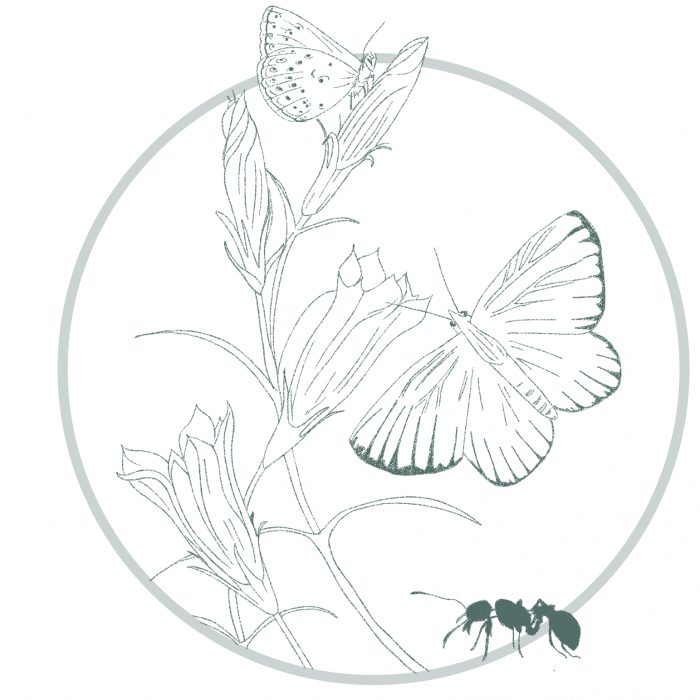
“Nectar, all year. We plant grasses, small flowers, shrubs and trees that give nectar after each other, like a chain link into the Nectar calendar. The Nectar calendar has to be fulfilled so that in every month of the year, insects will have access to nectar.”
But also ‘Housing’. For bees, for bats, for birds. The best thing is when you don’t see them, if they are hidden. Of course,” he proceeds on this subject “the animal to which we must pay most attention is the bee. But my idea is not to think about taking care of only a special insect.
We did it once, we helped with the design for the Slachthuissiteugs house in Antwerpen. I had a student that specialized in bees. And I asked him, as we always ask, ‘could you tell me what kind of species there are around?’ And, I think it took him three minutes, he said ‘the Red Mason Bee is fundamental’. It’s a very special insect. You never see it, but if the project is done perfectly for the Red Mason Bee, it’s also done perfectly for every other bee.